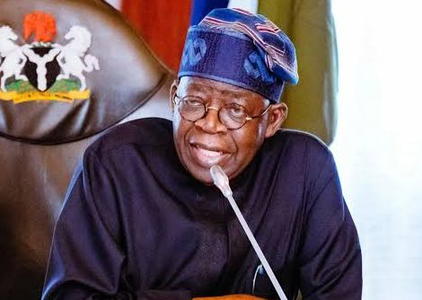

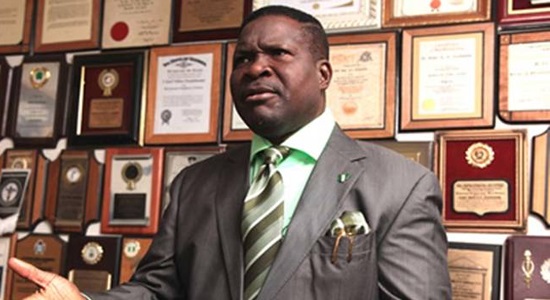

Rivers State Governor Siminalayi Fubara has defected from the Peoples Democratic Party (PDP) to the ruling All Progressive Party (APC). The defection was revealed by Fubara on Tuesday during a stakeholder meeting at the Government House in Port Harcourt. Fubara's action occurred just seventy-two hours after seventeen members of the Rivers State House of Assembly, including Speaker Martins Amaewhule, who was also elected on the PDP platform, resigned and joined the ruling APC.
"We can't support President (Tinubu) if we don't fully identify with him, not just the backyard support," the governor stated during the meeting. “So we have taken that decision here today that everyone who has followed and suffered with me, the decision this evening is that we are moving to the APC.”
After seeing President Bola Tinubu on Monday at the State House in Abuja, he defected. According to reports, he arrived at the Presidential Villa at approximately 5:01 p.m., was greeted by the Presidential Protocol Liaison Officer, was shown to the President's office, and left at approximately 5:45 p.m. Despite this, the meeting's specifics were kept secret.
Recall that due to political unrest in the oil-rich South-South state, Tinubu imposed a state of emergency in Rivers State on March 18 and suspended Governor Siminalayi Fubara, his deputy, Ngozi Odu, and all elected members of the state House of Assembly for six months.
According to the president, the decision was made to bring peace back to the state, which has been experiencing political unrest due to a dispute between the state legislature and the governor. Subsequently, he designated retired Vice Admiral Ibok-Ette Ibas, who is currently an ambassador, as the state's administrator to supervise government.
When Fubara took government again six months later, he promised to bring peace and harmony back to the state. In a nationwide broadcast, the governor characterised the emergency rule period as extremely difficult but essential to re-establishing order and protecting democratic institutions.
He claimed that in his capacity as governor, he made the decision to uphold the proclamation and work closely with President Tinubu and the National Assembly, putting peace above self-interest or political advantage.