


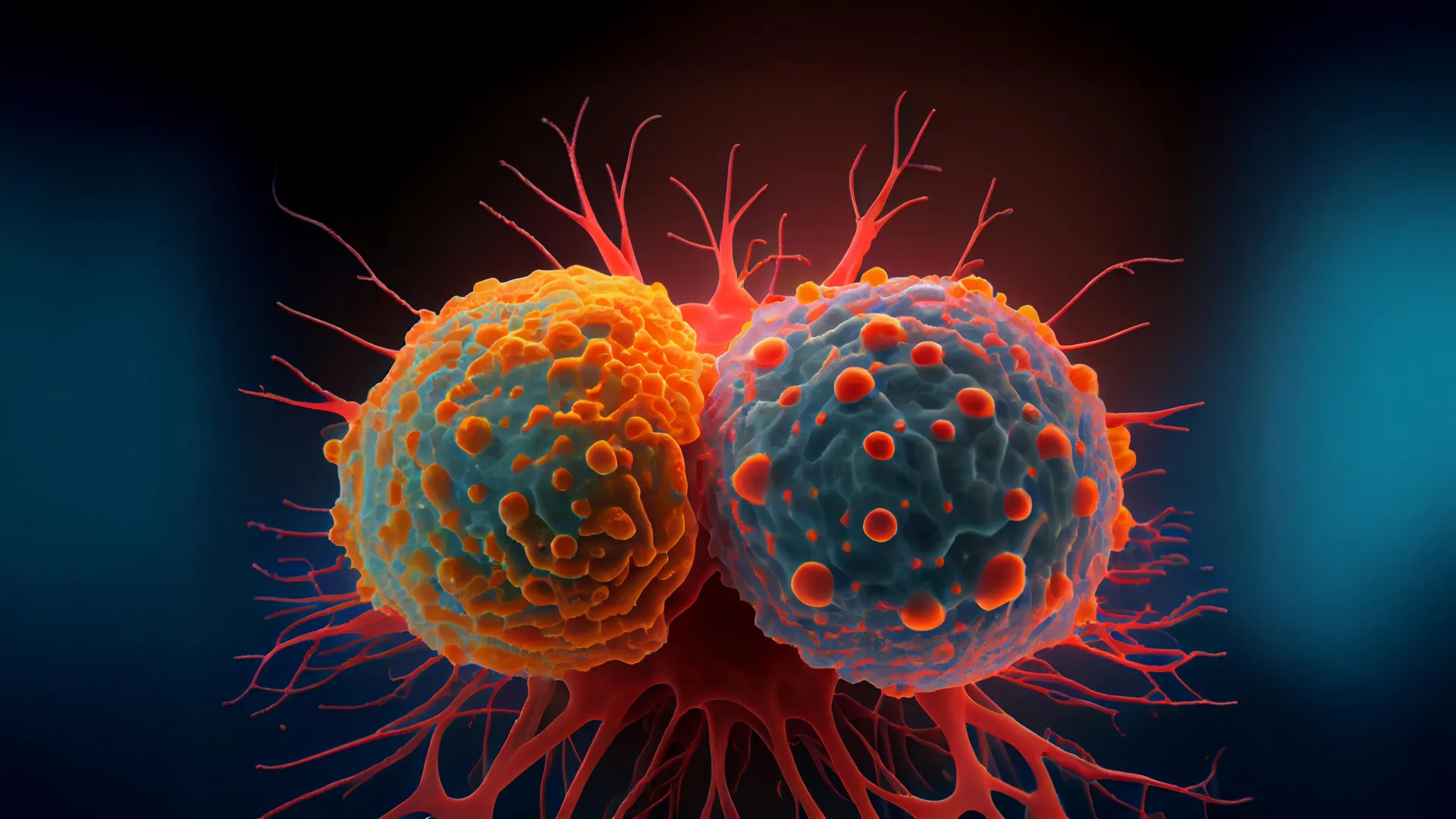
Scientists have identified a hidden vitamin A-related signal that helps cancers evade the immune system, and developed a way to switch it off. Researchers at the Princeton University branch of the Ludwig Institute for Cancer Research report that a vitamin A-derived molecule, all-trans retinoic acid, can suppress key immune responses against tumors and undermine the effectiveness of certain cancer vaccines. The findings, detailed in two studies published in Nature Immunology and iScience, help resolve a long-standing scientific debate over vitamin A's mixed role in cancer. They also led to the development of the first experimental drugs designed to block retinoic acid signaling, a pathway that had resisted drug development for decades.
In the Nature Immunology study, led by Yibin Kang and graduate student Cao Fang, researchers found that retinoic acid produced by dendritic cells, immune sentinels responsible for activating anti-tumor defenses can reprogram these cells to tolerate tumors. This immune tolerance sharply reduces the effectiveness of dendritic cell (DC) vaccines, a form of immunotherapy intended to train the immune system to recognize and attack cancer.
The team showed that standard laboratory conditions used to produce DC vaccines trigger these cells to generate high levels of retinoic acid, suppressing their maturation and weakening immune activation. "We discovered that under conditions commonly employed to produce DC vaccines, differentiating dendritic cells begin expressing ALDH1a2, producing high levels of retinoic acid," Fang said. "The nuclear signaling pathway it activates then suppresses DC maturation, diminishing the ability of these cells to trigger anti-tumor immunity."
To counter this effect, the researchers developed an experimental compound, KyA33, which blocks retinoic acid production in both cancer cells and dendritic cells. In animal studies, DC vaccines produced with KyA33 generated stronger immune responses, delayed tumor growth and slowed cancer progression. KyA33 also showed promise as a stand-alone immunotherapy when administered directly.
A second study, published in iScience and led by former Kang lab researcher Mark Esposito, focused on disabling retinoic acid signaling altogether. Using computational modeling combined with large-scale drug screening, the team overcame decades-long challenges in targeting this pathway, laying the groundwork for KyA33 and related compounds.
“Taken together, our findings reveal the broad influence retinoic acid has in attenuating vitally important immune responses to cancer,” Kang said. “In exploring this phenomenon, we also solved a longstanding challenge in pharmacology by developing safe and selective inhibitors of retinoic acid signaling and established preclinical proof of concept for their use in cancer immunotherapy.”
The research also explains a paradox surrounding vitamin A and cancer. While retinoic acid can inhibit cancer cell growth in laboratory settings, high vitamin A intake has been linked to increased cancer risk and mortality in large clinical studies. “Our study reveals the mechanistic basis for this paradox,” Esposito said, showing that cancers exploit retinoic acid to suppress immune attacks while becoming resistant to its direct anti-tumor effects.
Building on these discoveries, Kang and Esposito have launched a biotechnology company, Kayothera, to advance ALDH1A inhibitors toward clinical trials. The approach could open new avenues not only for cancer treatment, but also for other diseases influenced by retinoic acid signaling, including diabetes and cardiovascular disease.