


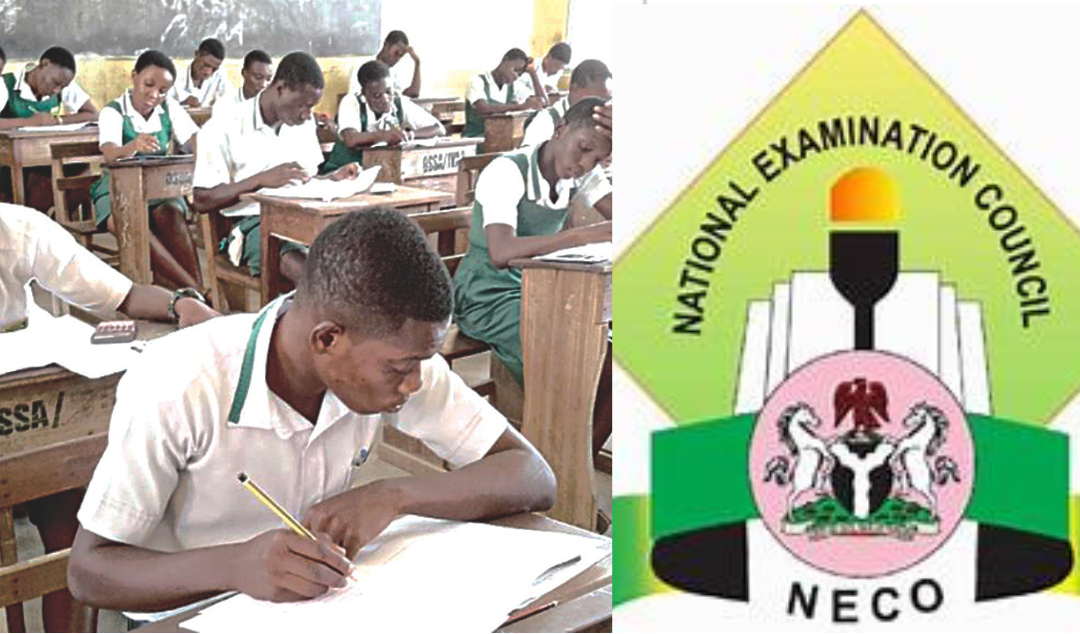
The Federal Government’s approval of a new N50,000 registration fee for the West African Examinations Council (WAEC) and National Examinations Council (NECO) Senior School Certificate Examinations (SSCE) has triggered criticism from education stakeholders, who warn that the move could increase the financial burden on families and further deepen Nigeria’s education challenges.
The new fee, which takes effect from the 2027 examination cycle, represents an 82 per cent increase from the current N27,500 charge and is among the highest recent adjustments in the cost of public examinations.
Education experts and other stakeholders have expressed concern that the increase could make secondary school examinations less affordable for many families already struggling with rising living costs. They warned that the development may worsen the country’s out-of-school crisis by creating additional barriers for students from low-income households.
The approval for the fee adjustment was communicated in a letter dated June 18, 2026, signed by the Director of Senior Secondary Education, Adeniji Ibrahim. The decision followed a request by WAEC for a review of examination charges for candidates sitting the SSCE from 2027.
According to the Federal Ministry of Education, the increase was reached after a meeting between the Minister of Education and examination bodies on March 31, 2026, where concerns over the rising cost of conducting national examinations were discussed.
The ministry explained that the minister had directed WAEC and NECO to adopt a uniform registration fee for their SSCE examinations.
The ministry stated, "You may recall that at a meeting of examination bodies held with the honourable minister of education on 31 March 2026, where the need for upward review of examination fees was discussed, the honourable minister directed that WAEC and NECO should adopt a uniform fee for the conduct of WAEC and NECO SSCE.
“Consequently, I am directed to convey the honourable minister of education’s approval of the sum of fifty thousand naira (N50,000.00) only as the new examination fee per candidate, with effect from NECO SSCE (Internal), 2027.”
The ministry also instructed the Registrar of NECO to inform relevant stakeholders about the implementation of the new fee structure ahead of the 2027 examination period.
Confirming the development, the Director of Press and Public Relations at the Federal Ministry of Education, Folasade Boriowo, said the approval for the increase had been granted.
“I can confirm the approval of an upward review of the examination fees. I spoke with the director in charge a few minutes ago, and he said the approval was done,” Folasade said.
Although the ministry did not provide a detailed explanation for the new fee, examination bodies have repeatedly attributed rising costs of conducting examinations to factors such as logistics, security arrangements, printing of materials, technological upgrades, supervision and administrative expenses.
However, education advocates argued that the increase could further strain families already dealing with rising costs of school fees, transportation, uniforms, textbooks and other educational needs.
Stakeholders also raised concerns about the impact on state governments that currently pay WAEC and NECO registration fees for students. They noted that states providing full or partial financial support for candidates may need to increase budgetary allocations to sustain such programmes.
For families and institutions already struggling to meet examination registration obligations, the new fee regime could present additional financial challenges.
While the Federal Government insists that the adjustment is necessary to maintain the quality and efficiency of national examinations, education stakeholders maintain that affordability should remain a key consideration in policies affecting millions of Nigerian students.
Fee Hike Will Worsen Out-of-School Children – Educationist
The National Mobilisation Officer of the Education Rights Campaign (ERC), Adaramoye Micheal Lenin, described the decision as counterproductive, arguing that it runs contrary to the government’s stated commitment to making education more accessible.
“This increase is not going to help curb the out-of-school crisis the government is trying to stop; rather, it will increase it. How does this help make education attractive to an existing group of Nigerians who don’t fancy education?
“With this increase, it seems education has been commercialised, and it’s now a danger, looking at the existing poor infrastructure and learning environment.
“We have Nigerians facing economic challenges, and adding this extra burden will see parents who can’t afford the fees withdraw their kids to come and join them on the farm, in the markets or wherever they make a living. Students will be discouraged.
“As a group, we demand an immediate reversal of the fees. We condemn it in totality,” he said.
Lenin argued that at a time when many families are struggling with rising inflation and declining purchasing power, making secondary school certification more expensive could discourage school enrolment rather than improve educational outcomes.
He also questioned how the fee increase aligns with government policies aimed at improving school enrolment and reducing learning poverty.
Similar concerns were raised by the President of the National Association of Proprietors of Private Schools (NAPPS), FCT chapter, Mrs Dorothy Okwuenu, who described the increase as unfortunate and warned that it could frustrate efforts to retain children in school.
Okwuenu said: “It is a terrible move from the government. It is quite unfortunate that the government will be increasing the fees now, and unfortunately, we are stuck. The increase has a multiplier effect, as it will discourage students from going to school, thus increasing the number of out-of-school children.
“We have struggling parents who can’t afford this increase. Will the government pay for the public school students? I understand the other policy on the JSS and SSS, which is a good one for students to have 12 years straight of education, but this increase can derail that policy.”
According to Okwuenu, while the Federal Government’s proposed 12-year uninterrupted basic education model is designed to improve retention and reduce dropout rates, increasing examination fees without corresponding support mechanisms could undermine those objectives.
She noted that many parents whose children attend both public and private schools are already under immense financial pressure and may struggle to absorb another significant increase in education-related expenses.
Dr Mary Chinwuba, Executive Director of Chalcedony Prime School, Abuja, said the increase raises broader concerns about equity, affordability and access to education.
She warned that thousands of students from low-income households may be unable to complete their secondary education simply because they cannot afford the examination fees.
She said, "Many Nigerian families are already struggling with inflation and the rising cost of living. A sharp increase in examination fees could prevent thousands of qualified students from sitting for WAEC or NECO exams, especially those from low-income homes.
“Some students who cannot afford the examination fees may become discouraged and leave school altogether, increasing the number of out-of-school youths.
“Parents are already paying tuition, textbooks, uniforms, transportation, and feeding costs. An additional N50,000 per candidate will place significant pressure on household finances.
“Children from wealthier families will continue their education with little difficulty, while those from poorer homes may be left behind, widening the gap in educational opportunity.
“My position as an educationist is that quality education should remain accessible, affordable, and inclusive.
The proprietress of The Winners Joy International Academy, Kubwa, Abuja, Mrs Rosemary Onyenagubo, also believes the increase could make quality education increasingly inaccessible for many families.
“Gradually, education is becoming only for the rich. The increase will cause so many students to drop out, especially those who can’t afford it. The increase is also coming at a time when many families are struggling to feed, and this may push them to abandon education totally,” she said.
It's Economically Insensitive – Atiku
Presidential candidate of the African Democratic Congress (ADC), Atiku Abubakar, has criticised the recent increase in fees for Federal Unity Colleges and the approval of a N50,000 uniform examination fee for candidates sitting for the West African Examinations Council (WAEC) and National Examinations Council (NECO) examinations from 2027.
Atiku, through a statement issued by his media aide, Phrank Shaibu, described the decision as cruel and economically insensitive, arguing that the policy would further worsen the challenges facing Nigerian families already struggling with difficult economic conditions.
He said the fee hikes came at a time when citizens were dealing with high inflation, rising food and transportation costs, increased electricity tariffs, stagnant earnings and widespread unemployment.
“It is unconscionable that at a time when Nigerian families are battling record inflation, soaring food prices, rising transportation costs, crippling electricity tariffs, stagnant incomes and widespread unemployment, the Tinubu administration chose to make education even more expensive,” Atiku said.
The former vice-president argued that the increase contradicts the government’s constitutional duty to ensure that education remains accessible to all Nigerian children, warning that higher costs could push more vulnerable families away from the education system.
Atiku stressed that education remains a critical tool for social advancement and one of the strongest pathways out of poverty, especially for children from disadvantaged backgrounds.
He added that any additional financial pressure placed on parents could prevent more children from accessing education and limit their ability to achieve their aspirations.
“Every additional financial burden imposed on parents translates into another child being denied the opportunity to learn, dream and contribute meaningfully to society,” he said.