


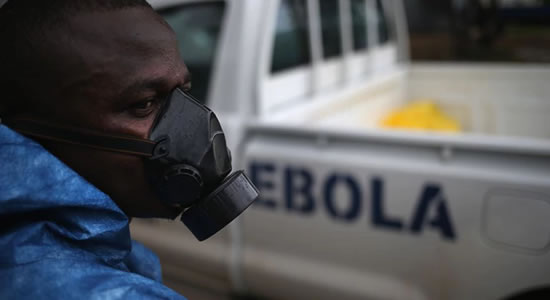
The World Health Organization has warned that the Ebola outbreak spreading across parts of Central Africa could continue for several months, as health officials struggle to contain rising infections in the Democratic Republic of Congo and neighboring Uganda. Authorities say more than 130 suspected deaths and over 540 suspected cases have already been recorded, though experts believe the real figures may be far higher.
The outbreak is concentrated in eastern Congo, a region heavily affected by armed conflict and mass displacement. The area hosts thousands of migrant laborers working in gold mines, many of whom frequently cross porous borders, increasing the risk of transmission. Health workers say the violence has weakened clinics and delayed emergency response efforts.
“The last outbreak in this area took two years,” to contain, said Dr. Anne Ancia, the World Health Organization’s representative in Congo. Speaking from Bunia, the capital of Ituri Province where the first cases were identified, she added: “We hope it won’t be that long, but I’m foreseeing several months.”
Congo’s Health Minister, Dr. Samuel-Roger Kamba, said the number of suspected deaths had climbed to more than 135, while suspected infections had surpassed 540. According to him, the figures continue to rise as medical teams expand investigations in affected communities and trace contacts linked to recent illnesses and deaths.
At a meeting in Geneva, the Director-General of the World Health Organization, Tedros Adhanom Ghebreyesus, expressed alarm over the speed of the outbreak. Laboratory testing has so far confirmed 32 Ebola infections linked to the Bundibugyo strain, a relatively rare species of the virus that experts fear may have been spreading undetected for weeks.
Health officials believe early confusion and lack of awareness contributed to the rapid spread. Dr. Kamba said some families initially failed to observe protective burial practices, unknowingly exposing others to infection. However, he noted that reporting of suspected cases improved after authorities formally declared an outbreak over the weekend.
Despite the worsening situation, Congolese authorities insisted the country has experience handling Ebola emergencies. Dr. Kamba stressed that Congo had previously contained 15 outbreaks without vaccines or specialized treatments, arguing that strong public health measures could once again bring the disease under control. Still, he cautioned that “The virus knows no border and knows no race and knows no tribe.”
Researchers from the MRC Centre for Global Infectious Disease Analysis at Imperial College London warned that the outbreak may already be much larger than official data suggests. Their latest model estimates that the true number of infections could exceed 1,000 cases. “Our analyses suggest that the true number of cases may be substantially higher than those confirmed to date,” said infectious disease modeler Dr. Anne Cori.
Medical teams on the ground say shortages of protective equipment, diagnostic kits and personnel remain a major challenge. Dr. Ancia explained that the capture of Goma by rebel forces has complicated the movement of supplies because the city serves as a major transport hub. Cases have already appeared in urban centers including Kampala in Uganda and Goma in eastern Congo, heightening fears of wider regional spread.
International concern has also intensified after the United States imposed travel-related restrictions on people who recently visited Congo, Uganda or South Sudan. Several neighboring countries have introduced screening measures at borders, although the Africa Centers for Disease Control criticized broad travel restrictions. “Global health security cannot succeed if countries are penalized for transparency during outbreaks,” said Africa CDC chief Dr. Jean Kaseya. Meanwhile, an American missionary doctor infected while working in Congo has been evacuated for treatment, while two other doctors linked to the same mission remain in quarantine under observation.