


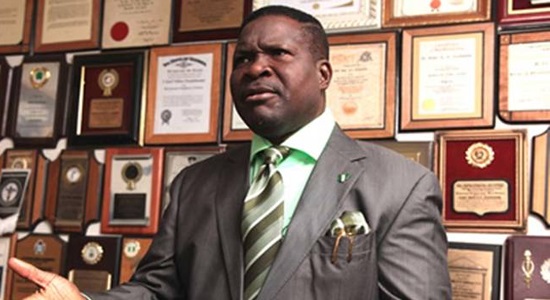
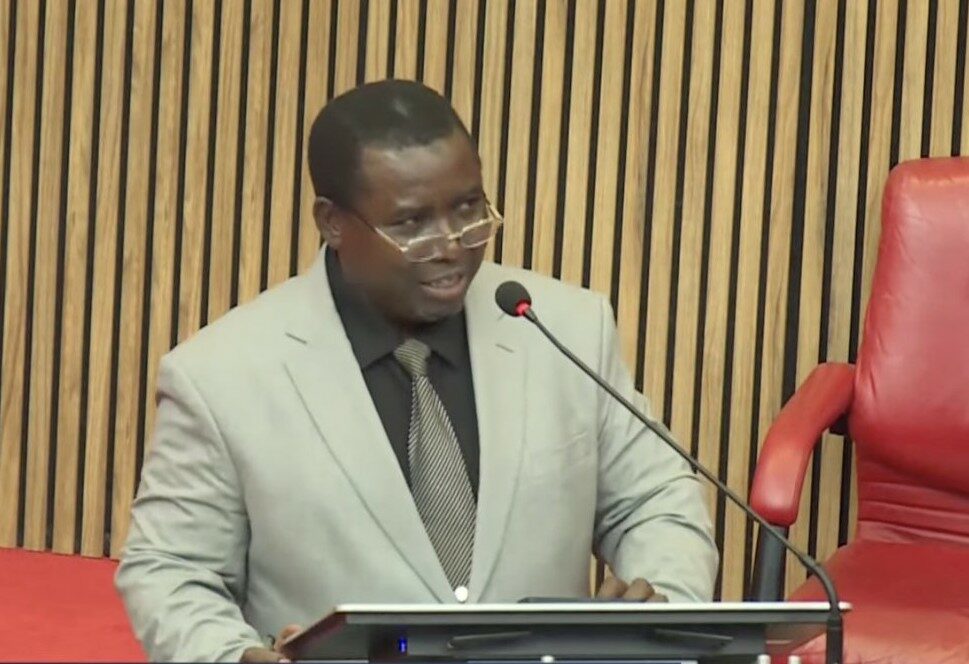
Prof. Joash Amupitan (SAN), the chairman of the Independent National Electoral Commission, has promised that the 2027 General Election will be free, fair, transparent, and technologically advanced. He has also declared that the Commission will not allow any electoral malfeasance. Speaking in Lagos during the Commission's 2026 Induction and Strategic Retreat, which took place from January 9 to 10, Amupitan stated that INEC was preparing for a rapidly changing electoral landscape and needed to meet Nigerians' expectations.
"We are gathered here today as guardians of the Nigerian people's will, not only as leaders and electoral administrators. He stated, "This retreat acts as a bridge between our institutional experience and the creative demands of a rapidly changing electoral landscape."
He called the November 2025 Anambra State governorship election a pivotal occasion in his term and commended INEC employees for their efforts. Amupitan stated that significant electoral turning points, such as the FCT Area Council elections in February 2026 and the off-cycle governorship elections in the states of Ekiti and Osun, would occur before the 2027 General Election.
"These elections are more than simply regular exercises; they serve as a litmus test for our preparedness and dedication. They allow us to improve our procedures. making sure that all of the logistical and technical equipment is in perfect working order before the 2027 major national exercise," he stated.
Five non-negotiable pillars—free, fair, credible, transparent, and inclusive elections—were outlined by the INEC chairman as the foundation for the Commission's operations. "Our goal is to conduct elections that are free from any kind of meddling, equitable for all candidates and political parties, trustworthy in the eyes of the international community, and open throughout the entire process. and inclusive of all Nigerians, irrespective of location or physical capacity," he stated.
He emphasized the importance of young people casting their first ballots in 2027, pointing out that they would want transparency and openness in real time. For the first time, millions of young people will be going to the polls. These individuals are digital natives who have little tolerance for obfuscation and demand transparency in real-time.
It is our responsibility to convince these youthful, tech-savvy, and frequently doubtful voters that INEC is reliable," he stated. Amupitan emphasized rigorous devotion to the law when discussing the legal framework, stating, "Let it be known that under my leadership, the rule of law is not a suggestion; it is our operating system."
He disclosed that the retreat would cover 17 major topics, such as political party management, voter registration, logistics, ad hoc personnel, transportation, and election security. "We have to make sure that the revalidation and continuous voter registration processes are impeccable. We'll talk about election security. and how to uphold party financial openness and internal democracy," he said.
Amupitan stated that INEC had a fantastic chance to change the course of Nigerian elections by establishing challenging goals for 2027. "The General Election of 2027 must be free, fair, and a turning point in Nigerian electoral history. He proclaimed, "Let it be said that INEC became the best Election Management Body in Africa under our direction—a beacon of integrity, a model of technological efficiency, and a fortress of democratic values."
He issued a warning that there would be consequences for any violation of INEC ideals. "I emphasize my dedication to your well-being, but I must also stress that any compromise on our principles or procedures will have repercussions. Misconduct, whether by commission or omission, is not tolerated.
The INEC chairman stated, "Let's use this retreat to break down silos, foster open communication, volunteer constructive feedback, and emerge as a united front." Prof. Ayobami Salami, the Lagos state resident electoral commissioner, welcomed attendees to the retreat and stated that it was a major turning point in the Commission's ongoing development.
He urged officials to rise to the challenge, pointing out that public expectations of the election process were "higher than ever" and that the retreat was intended to increase leadership ability and improve operational preparedness.
He clarified that the retreat would foster peer involvement and enhance institutional awareness, providing a useful setting for institutional bonding and idea exchange that would fortify the Commission as a single, unified entity.
"The significance of early planning, strategic coordination, and institutional cohesion cannot be overstated as we move closer to the 2027 General Election," Salami remarked.