


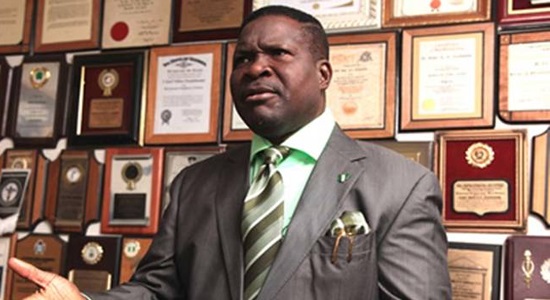
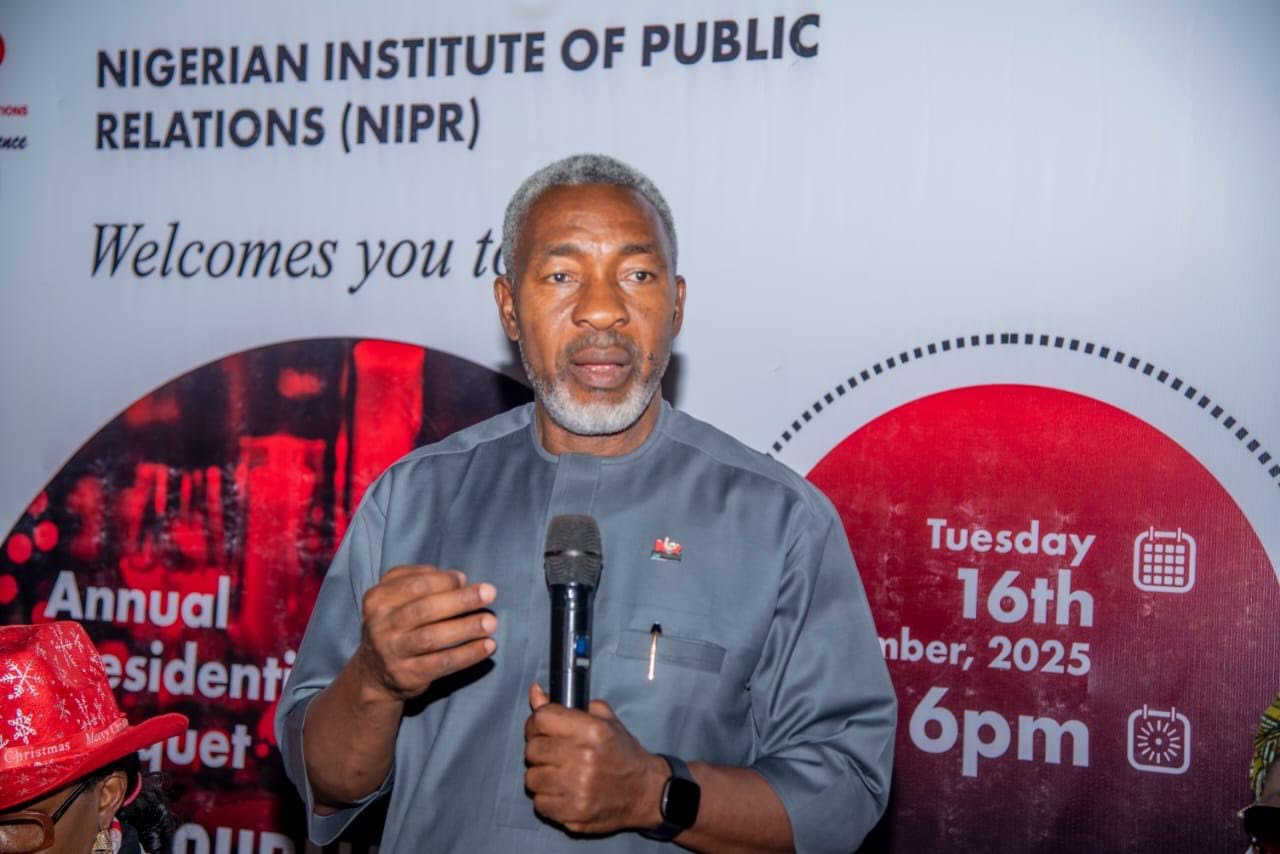
The Federal Government's decision to utilize lobbying services in the United States has been defended by the Nigerian Institute of Public Relations, which maintains that the action falls within the bounds of acceptable public relations practice and does not constitute a criminal offense. During the official presentation of the First Nigeria Reputation Perception Index Report 2025 on Thursday at the National Assembly Complex in Abuja, NIPR President Dr. Ike Neliaku provided the clarification.
Neliaku's remarks came amid persistent criticism from civil society organizations and opposition parties about the President Bola Tinubu administration's approval of a $9 million contract for lobbying in the United States.
At a time when many Nigerians are dealing with growing insecurity, inflation, and economic hardship, critics contend that the expenditure represents misplaced priorities.
In response to the worries, the president of NIPR stated that lobbying was a legitimate part of public relations and shouldn't be mistaken for illegal behavior.
"Many are asking why we should hire lobbyists," he stated. One aspect of public relations is lobbying. Therefore, doing so is not illegal. The most significant point, though, is that the people we are hiring to advocate for us will shortly be traveling from 126 countries (for the World Public Relations Forum 2026), which is the best lobbying we can do.
Neliaku went on to say that Nigeria will gain more from exposure and direct interaction than from traditional image management initiatives outside. The PR specialist contended that rather than the everyday reality faced by common people, elite narratives propagated by international media frequently influenced how the world saw Nigeria.
This is because they will have a general idea of what they have seen by the time they return. The elite control reputation, while common people control reality. "The elite who have access to the media will continue to paint a picture of a programmed nation, while ordinary people are happy with Nigerians, saying your country is wonderful and blessed," he said.
According to the head of NIPR, this discrepancy helped to explain why Nigeria was occasionally viewed negatively on the international scene. He asserts that Nigeria's human capital, both domestically and abroad, is its greatest asset.
He said, “So when you are painted as a Country of Particular Concern, understand where it is coming from. Nigeria's people are its most valuable resource. It is a very separate matter that we have not been able to turn this asset into capital.
Speaking at the event as well, Senator Jibrin Barau, the Deputy President of the Senate, defined national reputation as a strategic asset rather than just propaganda in a world growing more interconnected by the day.
The senator praised the creation of a data-driven framework for evaluating Nigeria's reputation in important areas. Such independent assessments, according to Barau, are crucial for efficient supervision and legislation.
"National reputation is no longer a matter of sentiment or propaganda in today's interconnected world; it is a strategic asset," he stated. Therefore, Nigeria's courageous move to comprehensively evaluate how it is seen across important aspects like governance, economy, security, institutions, culture, innovation, and social trust is both admirable and relevant.
As the guardian of the people's mandate, the National Assembly needs reliable information and unbiased opinions to carry out its fundamental duties of representation, oversight, and legislation.
"Evidence-based reports like this enable lawmakers to create responsive legislation, fortify institutional frameworks, and demand accountability where it matters most." The Senate leader did, however, issue a warning that reputation ought to be grounded in actual experiences.
In the end, lived facts are the foundation of reputation. It is influenced by the standard of leadership, the consistency of public policy, the integrity of institutions, and citizens' daily experiences.
He promised to support legislation that advances social justice, unity, and transparency.
Meanwhile, Joe Keshi, President of the Association of Retired Career Ambassadors of Nigeria, cautioned against conflating propaganda with public relations, pointing out that Nigeria's reputation had taken a serious hit.
Based on his own experience, Keshi compared national reputation to family values that need to be actively safeguarded.
"There is a distinction between propaganda and public relations," he stated. Nigeria's standing in the world is deteriorating. Growing up in Ibadan as a young miscreant, our parents used to caution us against damaging their reputation. They felt they had a reputation to uphold and respected themselves.
According to the previous chairman of the UBA board, a nation's reputation has grown to be one of its most precious, albeit intangible, assets.
One of a country's most important, albeit intangible, assets is its reputation. A nation's reputation has a big impact on how governments, corporations, investors, visitors, and worldwide communities view it, he said.
The former career ambassador bemoaned Nigeria's declining diplomatic clout in comparison to previous decades, citing military intervention and President Donald Trump's designation of Nigeria as a Country of Particular Concern.
He bemoaned, "Unfortunately, at this time, we are unable to effectively respond to any action from the United States, and you all know why." Keshi maintained that leadership and administration were crucial even as he acknowledged Nigeria's significant cultural influence.
Conversely, Nigeria has enormous cultural and innovative reputational capital. Listen, this nation will remain in crisis if you lack effective leadership and government.
"We require institutional changes and strategic policy consistency. And that's crucial to this country's survival," he said.