


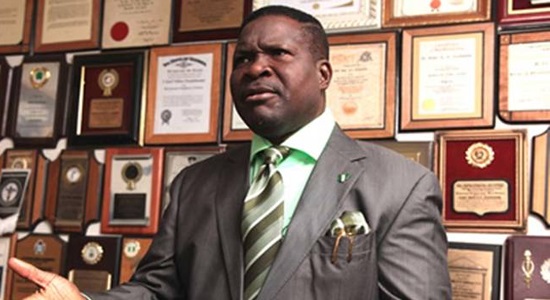
The Nigerian Customs Service (NCS) has intensified efforts with the use of Artificial Intelligence (AI) tools to curb revenue leakages and enhance remittances in its operations across the nation. Bashir Adewale Adeniyi, Comptroller-General of Customs, announced on Monday in Abuja during a training program focused on AI-powered revenue generation, remittances, and reconciliation for the Service. He explained that integrating AI is part of wider reforms designed to enhance transparency, accountability, and efficiency in managing revenue. AI tools can analyze patterns, such as inconsistencies in cargo weight, to detect discrepancies in declarations, helping to identify under-declarations and reduce revenue loss.
Adeniyi also pointed out that, even though the National Assembly usually checks in by calling people to testify, the Customs Service has taken the initiative to include important committee members in the training, encouraging teamwork to support responsible financial practices
Customs Deploys AI to Tackle Revenue Leakages, Enhance Remittances
The head of Customs emphasized that the Nigerian Customs Service (NCS) has intensified efforts with the use of Artificial Intelligence (AI) tools to curb revenue leakages and enhance remittances in its operations across the nation. Bashir Adewale Adeniyi, Comptroller-General of Customs, announced on Monday in Abuja during a training program focused on AI-powered revenue generation, remittances, and reconciliation for the Service.
He explained that integrating AI is part of wider reforms designed to enhance transparency, accountability, and efficiency in managing revenue. AI tools can analyze patterns, such as inconsistencies in cargo weight, to detect discrepancies in declarations, helping to identify under-declarations and reduce revenue loss. AI and machine learning.
However, he emphasized that several parties are involved in the revenue production and remittance processes, including revenue collection banks, platform providers, auditors, and government oversight organizations. To fully realize the advantages of AI, Adeniyi urged increased cooperation and use of comparable technologies throughout the whole value chain. The course aims to equip Customs officers with the knowledge and skills necessary to thrive in an AI-driven environment.
The proposal, according to Kikelomo Adeola, Deputy Comptroller-General in charge of Finance, Administration, and Technical Services, is a crucial step toward enhancing accountability and transparency in public revenue management.
According to her, AI presents enormous potential for streamlining revenue operations, reducing leakages, increasing remittance accuracy, and guaranteeing smooth reconciliation.
In order to close gaps in the revenue value chain, Adeola continued, the training would introduce participants to technologies like automated data analysis, predictive intelligence, and real-time reconciliation systems.
Speaking as well, Bamidele Salam, Chairman of the House of Representatives Public Accounts Committee, stated that although AI adoption in Nigeria is still low by international standards, it has enormous potential to boost operational effectiveness.
He pointed out that creative approaches to increase revenue production were necessary given the nation's expanding financial demands. He also emphasized the value of honesty and dedication among employees, pointing out that the people who use AI systems have a significant impact on their efficacy.
Salam promised that the Nigeria Customs Service would continue to receive support from the National Assembly in order to improve its operations and fulfill its duty.