

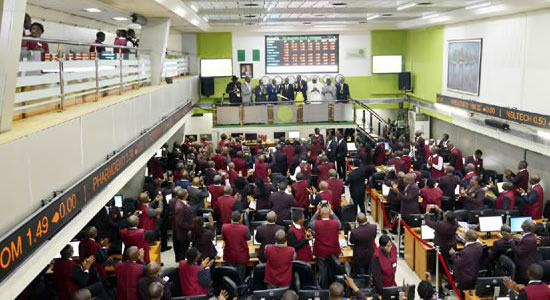
Nigeria's equities market recorded a strong rally in the first quarter of the year, delivering net capital gains of N29.17 trillion as sustained demand from both domestic and foreign investors drove share prices higher. Trading data from the Nigerian Exchange (NGX) showed that the market maintained momentum throughout the three-month period, reinforcing investor appetite for equities. The market closed the quarter with an average year-to-date return of 29.35 per cent, already surpassing half of the 51.19 per cent return achieved for the full year in 2025. The performance translates to capital gains of N29.17 trillion three months, more than 90 per cent of the N32.13 trillion recorded for the entirety of last year.
This robust performance places Nigeria among the top three best-performing stock markets globally, further cementing its position as a leading frontier market. Analysts pointed to improving macroeconomic conditions as a key driver, including increased foreign inflows and a growing tendency for offshore investors to retain funds within the domestic market.
The benchmark All Share Index (ASI), which tracks the performance of listed equities, rose from 155,613.03 points at the start of the year to 201,287.78 points at the end of the quarter, reflecting a 29.35 per cent increase. Widely regarded as a barometer of economic health and investor sentiment, the ASI’s rise underscores renewed confidence in the market.
Similarly, the total market capitalisation of listed equities climbed from N99.376 trillion to N129.210 trillion, an increase of N29.834 trillion. Analysts noted that minor differences between index gains and market value reflect the partial impact of newly listed shares yet to be fully adjusted.
Market experts attributed the rally to a combination of stronger corporate earnings, increased foreign portfolio investments and a more stable foreign exchange environment. Declining inflation and improved dividend expectations have also encouraged portfolio shifts toward equities.
Corporate performance across sectors supported the bullish trend, particularly within manufacturing. Companies reported significant rebounds in profitability and revenue growth, signalling broader economic recovery and strengthening fundamentals among listed firms.
Commenting on the development, NGX Group Managing Director Temi Popoola said: “Nigeria’s ongoing reforms are strengthening domestic capital formation, and the market is responding positively. Increased participation by local investors, improving corporate fundamentals, and continued market modernisation are reinforcing the role of the capital market as a catalyst for long-term wealth creation and sustainable economic growth”. He added: “The real test of reforms is what local capital does and how domestic corporates respond. In Nigeria today, local capital is playing a very strong role. Markets were up more than 50 per cent last year, issuers are raising new capital, retail investors are returning to the market, and corporate balance sheets and governance standards are improving”.