


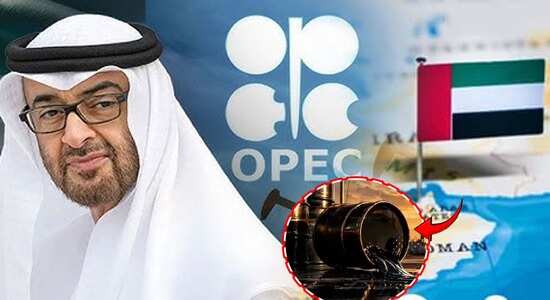
The United Arab Emirates has announced its decision to withdraw from OPEC, in a move that could reshape global oil dynamics and deepen divisions among major Gulf producers. The decision comes amid an escalating energy crisis triggered by the ongoing Iran war, which has disrupted supply routes and exposed fractures within the oil-producing alliance. UAE Energy Minister Suhail Mohamed al-Mazrouei described the exit as a calculated policy shift, rooted in the country's long-term energy strategy. "This is a policy decision, it has been done after a careful look at current and future policies related to the level of production," he said in a telephone interview, adding that the move was made independently without consultation with other nations.
The UAE, one of OPEC's largest producers, will formally leave the group on May 1. Its departure is expected to weaken the organisation's grip on global oil supply and widen an existing rift with Saudi Arabia, OPEC's de facto leader. Analysts say the split reflects growing competition and diverging economic priorities between the two Gulf powers.
The timing is significant. The conflict involving Iran has severely disrupted shipments through the Strait of Hormuz, a critical chokepoint for global energy flows. With threats and attacks on vessels limiting exports, OPEC producers have struggled to maintain supply levels, further straining the group’s cohesion.
Mazrouei downplayed the likelihood of immediate market disruption, citing ongoing logistical constraints in the Gulf. However, he suggested the UAE is positioning itself to respond to rising global energy demand once conditions stabilise, potentially increasing output free from OPEC-imposed quotas.
Oil markets reacted cautiously to the announcement, with prices trimming earlier gains. Still, the longer-term implications could be profound. The International Energy Agency has already noted a decline in OPEC+’s share of global output, falling from about 48% in February to 44% in March, with further declines expected as production disruptions persist and the UAE exits.
Analysts argue the move could benefit consumers and global markets by increasing competition. Monica Malik, chief economist at ADCB, said the decision “opens the door for the UAE to gain global market share when the geopolitical situation normalises.” Others point to the country’s spare production capacity as a key factor in its strategic repositioning.
Jorge Leon of Rystad Energy noted that the UAE, alongside Saudi Arabia, is among the few producers capable of significantly boosting output. “Outside the group, the UAE would have both the incentive and the ability to increase production, raising broader questions about the sustainability of Saudi Arabia’s role as the market’s central stabiliser,” he said.
The decision also carries geopolitical overtones. It has been framed by some as aligning with longstanding criticism from former U.S. President Donald Trump, who once accused OPEC of “ripping off the rest of the world” through high oil prices. The UAE’s exit could be seen as a shift toward a more market-driven approach.
More broadly, the move underscores the declining influence of OPEC in a changing energy landscape. Once controlling roughly half of global oil output, the group’s share has steadily eroded, driven in part by the rise of U.S. shale production. With the UAE’s departure, that influence is set to weaken further, raising the prospect of a more fragmented and potentially volatile global oil market.
