


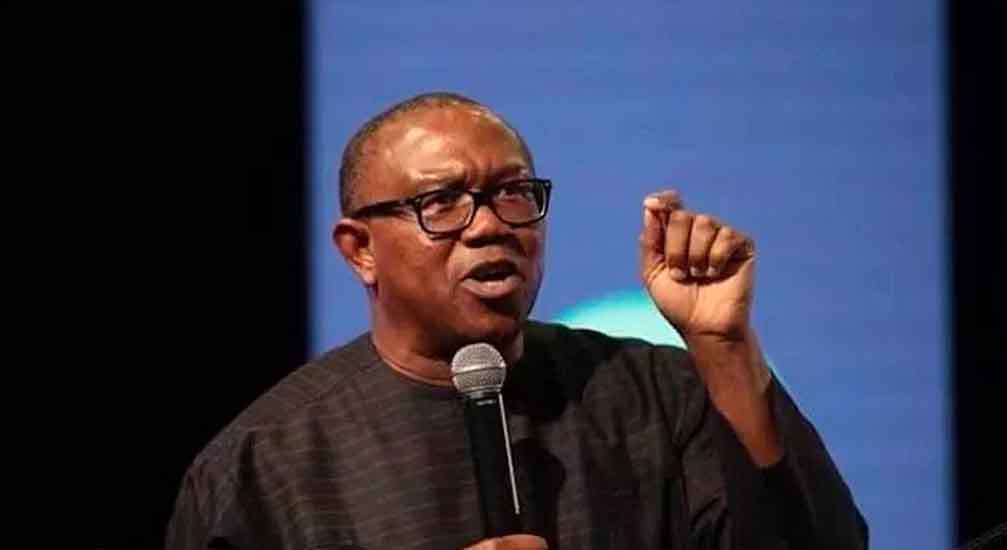
Presidential candidate of the Nigeria Democratic Congress (NDC), Peter Obi, has said his administration would adopt a dual strategy of dialogue and force in addressing Nigeria’s security challenges if elected, stressing that peaceful engagement would be extended to those willing to renounce violence. Speaking during an interview on BlackBox with Rufai Oseni, the former Anambra State governor outlined what he described as a balanced approach to restoring security and fostering national unity across the country.
Obi said individuals and groups prepared to embrace peace and contribute positively to society should be given the opportunity to do so through dialogue and reconciliation.
“In uniting the country, anybody who wants peace, I will talk with him; I will negotiate with him. Anybody who wants war, we will go to war,” Obi said.
According to him, sustainable peace requires creating avenues for rehabilitation and reintegration for those who genuinely abandon criminal activities and demonstrate a commitment to change.
The NDC flagbearer argued that societies progress when they provide opportunities for reform rather than permanently defining individuals by their past actions.
To illustrate his point, Obi recounted a visit to a university in the United States where, he said, many members of the institution’s leadership had previously served prison sentences before rebuilding their lives.
“I once visited a university in America where the entire faculty are people who came out of prison.
“From the dean to the registrar, professors spent years in prison for one offence or the other.
“So, if you say you want to change and be part of this new Nigeria we are talking about, we have reached a point where we have to tell ourselves the truth,” he said.
Obi also linked security to national cohesion, maintaining that every region and ethnic group must feel adequately represented in governance and national development.
He said his vision for Nigeria is rooted in inclusiveness, fairness and equal opportunities, adding that no community should feel excluded or marginalised.
“I will unite the country and ensure that nobody is left behind. No tribe is left behind; there would be inclusiveness. We will show love and care for everybody,” he stated.
His comments have reignited debate over the most effective approach to tackling the country’s persistent insecurity, with opinions divided between advocates of dialogue and proponents of a purely military response.
Supporters of negotiations argue that engagement can serve as an important component of broader peace-building efforts. However, critics contend that talks with armed groups could legitimise criminal activities and weaken ongoing security operations.
The discussion has intensified in recent days, with opponents of negotiations citing resolutions of the Senate and remarks by senior lawyer Femi Falana, who warned that government-backed discussions with terrorists could contravene existing laws and send an inappropriate message to criminal groups.

