


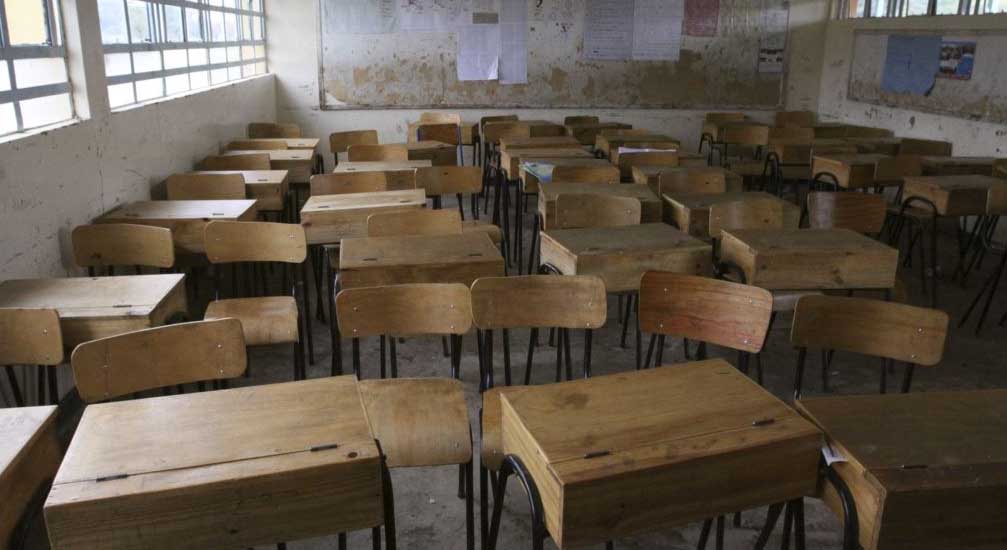
The number of children and young people out of school globally has risen to 273 million, according to the 2026 Global Education Monitoring Report released by UNESCO on Wednesday, marking the seventh consecutive year in increase. The report paints a troubling picture of global education, revealing that one in six school-age children is excluded from formal learning, while only two in three students complete secondary education.
UNESCO attributed the worsening trend to a combination of population growth, conflict, and shrinking education budgets, all of which have slowed progress in keeping children in school since 2015.
"Progress in keeping children in school has slowed across almost every region," the report noted, highlighting sub-Saharan Africa as one of the harderst-hit regions.
In conflict-affected areas, the crisis is even more severe, with millions more children out of school than official statistic capture, exacerbating already fragile education systems.
The situation is particularly urgent in regions experiencing ongoing instability, where school closures and insecurity continue to push children out of classrooms and increase the risk of long-term educational setbacks.
Despite the grim statistics, UNESCO emphasized that significant progress has been made over the past two decades, offering a measure of hope amid the challenges.
Global enrolment has increased substantially since 2000, with “more than 25 additional children accessing school every minute,” reflecting a 30 percent rise in primary and secondary education participation.
Several countries have recorded notable successes, drastically reducing out-of-school rates and expanding access across all levels of education, demonstrating that targeted efforts can yield meaningful results.
The report also highlights improvements in completion rates, with more children not only enrolling in school but finishing their studies, although progress remains uneven and insufficient to meet global targets.
However, UNESCO cautioned that advancements have come with trade-offs, as efforts to make education more affordable in some cases compromised quality and failed to address indirect costs such as transportation and meals.
“Progress is not one-size-fits-all because context is so frequently overlooked,” the report stressed, underscoring the importance of designing policies tailored to national realities.
Ultimately, UNESCO concluded that no single policy can solve the global education crisis, urging governments and partners to adopt comprehensive, evidence-based approaches and sustain investment to ensure every child has access to quality learning opportunities.