


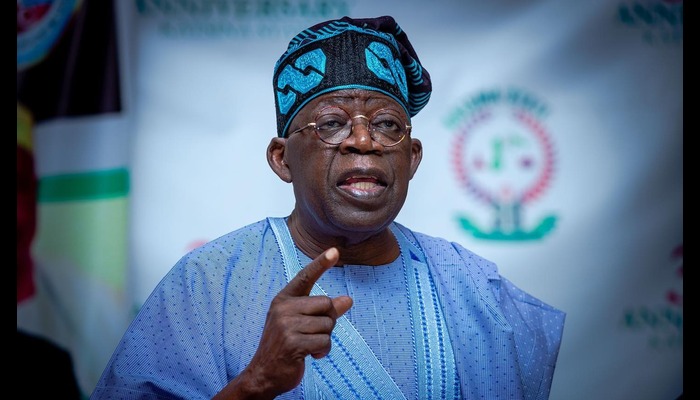
A decades-long dispute over Oil Prospecting Licence (OPL) 245, one of Nigeria's most commercially significant deepwater oil blocks, was resolved, President Bola Tinubu announced on Thursday. According to the presidency, the deal opens the door for a development that might increase the nation's production capacity by almost 150,000 barrels per day. The president's administration described the deal as a "historic settlement" that would enable the exploitation of one of Nigeria's most strategically significant deepwater resources, although specifics were not disclosed.
Due to corruption and multijurisdictional legal disputes involving Nigeria, Italy, the United Kingdom, and other countries, OPL 245, a massive deepwater offshore asset in the Niger Delta with an estimated nine billion barrels of crude, has remained virtually untapped for nearly thirty years.
The Federal Government of Nigeria, Shell, Eni, and Malabu Oil and Gas have all filed lawsuits in several nations over the disputes, which center on the block's ownership and acquisition.
The deal "restores clarity and stability" to an asset widely acknowledged as one of Nigeria's most commercially attractive deepwater blocks, according to a statement from presidential spokeswoman Bayo Onanuga.
Senior leaders of the Italian oil firm Eni, including its Chief Executive Officer Claudio Descalzi, Chief Operating Officer Guido Brusco, Head of Sub-Saharan Region Mario Bello, and Managing Director of Nigerian Agip Exploration Fabrizio Bolondi, were present at the signing. Olu Arowolo-Verheijen, the president's special adviser on energy, was also in attendance.
"The Final Investment Decision on the Zabazaba–Etan development, a project capable of adding approximately 150,000 barrels per day to Nigeria's production capacity and strengthening the country's long-term energy outlook, is now clear due to the settlement of the dispute," Mr. Onanuga stated.
The agreement reaffirmed "the administration's commitment to resolving legacy disputes, restoring investor confidence, and ensuring that Nigeria's natural resources deliver sustainable value to the Nigerian people," according to President Tinubu, who called it a strategic turning point in Nigeria's economic reform agenda.
The president declared, "This resolution sends a clear signal to global investors that Nigeria is prepared to uphold the rule of law, address legacy issues transparently, and create a stable environment for long-term capital."
According to Ms. Arowolo-Verheijen, the settlement marked a substantial improvement over the 2011 Resolution Agreement and reflected the administration's more extensive fiscal and governance changes in the oil sector as well as the Petroleum Industry Act's (PIA) regulatory framework.
"The revised terms strike a balanced outcome, ensuring stronger value accretion and safeguards for the Federation while providing investors with the clarity and predictability required to proceed with major deepwater investments," she continued.
Nigeria divided OPL 245 into four separate assets to be run by Eni and Shell, according to a Reuters report this week. For years, the Nigerian government has made it clear that it wanted to find a solution that would start producing the block.
According to the presidency, the resolution is a component of a larger set of reforms that have been implemented since 2023 in an effort to make Nigeria more competitive in international energy markets.
According to Ms. Arowolo-Verheijen, "these reforms, anchored in the Petroleum Industry Act and supported by targeted executive actions, have already contributed to renewed investor interest and significant capital inflows into Nigeria's oil and gas sector."
"The Federal Government has eliminated one of the most significant legacy risks in Nigeria's upstream sector and reaffirmed its commitment to predictable regulation, transparent governance, and commercially viable investment frameworks by resolving the OPL 245 dispute," she continued.