


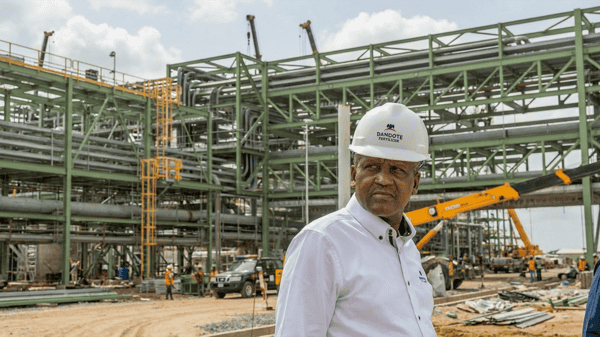
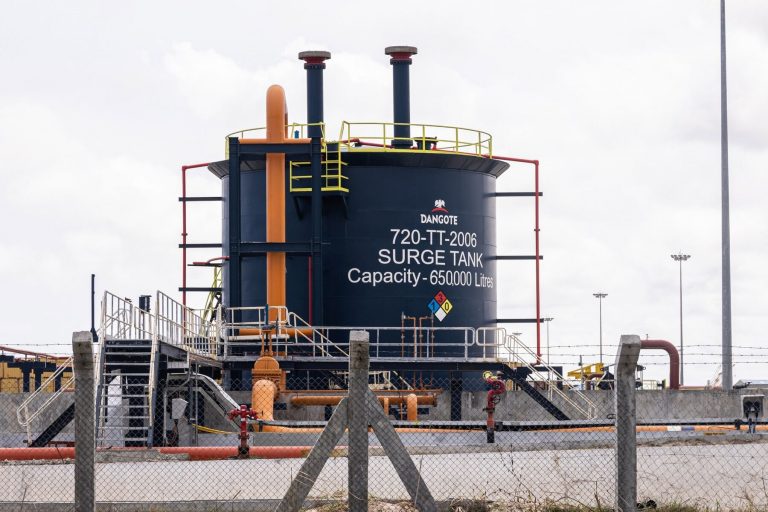
Nigeria's Dangote Group has awarded India's state-owned Engineers India Ltd (EIL) a renewed contract for over $350 million, strengthening its position in the next stage of the Dangote Refinery and Petrochemicals Complex's expansion in Lagos. Similar to EIL's duties during the refinery's original development, the extended deal encompasses engineering, procurement, and construction management (EPCM) services as well as project management consultancy (PMC) for the expansion. In 2024, the first phase of the refinery was put into service.
The addition of a second processing train, which will increase total refining capacity from 650,000 barrels per day to roughly 1.4 million barrels per day, is the main component of the expansion plan. It is anticipated that production from the enlarged facility will concentrate on fuels that comply with Euro VI, in line with the increasingly strict international emissions regulations.
When finished, the expanded complex is anticipated to be among the biggest single-site petrochemical and refinery facilities in the world, significantly solidifying its strategic significance in the world's downstream and energy markets.
The Dangote Refinery, which is situated in the Lekki Free Zone, is thought to have cost over $19 billion, making it one of the most expensive industrial ventures in African history. Since its official opening in May 2023, the facility has gradually increased operations to reflect the project's size and technical complexity.
The refinery started making diesel and aviation fuel in early 2024, and then it started making petrol. For Nigeria, which has long relied largely on imported refined fuels while being Africa's greatest producer of crude oil, this represented a huge change.
Producing Euro V-quality petrol, diesel, jet fuel and polypropylene, the current 650,000-barrel-per-day integrated refinery and petrochemicals complex is already acknowledged as the largest single-train refinery in the world.
Dangote Group is expanding its petrochemical businesses concurrently with the refining development. Through the renovation of an existing polypropylene unit and the installation of a new 1.2 million-tonne unit, plans call for expanding polypropylene capacity from 830,000 tonnes annually to 2.4 million tonnes annually. In order to increase the availability of propylene feedstock, the initiative also includes a global UOP Oleflex facility that can produce 750,000 tonnes annually.
The deal, according to EIL, underlined Dangote Group's faith in its capacity to complete projects of extraordinary magnitude and complexity. The business stated that it will support the construction of what is anticipated to be one of the most cutting-edge integrated energy complexes in the world by utilising its decades of experience, multidisciplinary knowledge, and global execution methodology.
With stakes in oil and gas, petrochemicals, fertilisers, cement, sugar, and food processing across 17 African nations, Dangote Group continues to be Nigeria's biggest multinational conglomerate and one of Africa's most powerful industrial organisations.
The Dangote Refinery, at the heart of Nigeria's changing energy environment, has started to alleviate domestic fuel shortages and lessen dependency on imports. The facility is increasingly seen as a possible hub for refined petroleum exports throughout West and Central Africa, highlighting its wider role in the economic and energy revolution of the continent, despite persistent issues with crude availability, pricing, and regulation.


.jpeg?width=550&height=300 "Abuja Disco Transition into HoldCo, Reveals New Subsidiaries")