


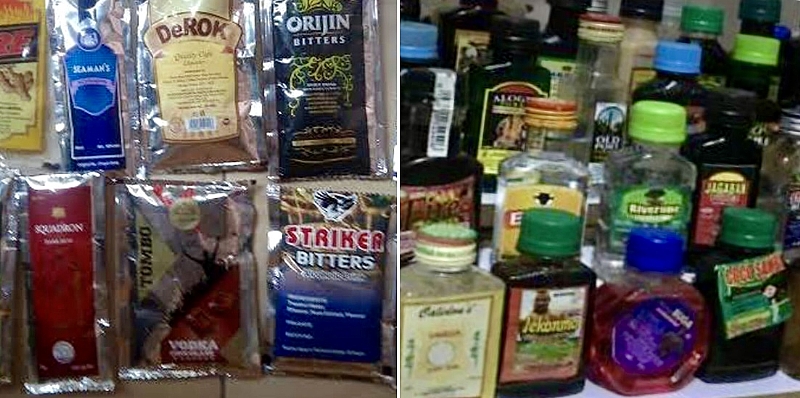
Enforcement of the ban on packaged alcohol and sales in sachets and small bottles is protective rather than punitive and is still prohibited in the nation, according to the National Agency for Food and Drug Administration and Control (NAFDAC). Professor Mojisola Adeyeye, Director-General of NAFDAC, signed a statement stating that the organization had resumed enforcing its prohibition on the manufacture and distribution of alcoholic beverages in sachets and small-volume PET/glass bottles (less than 200 ml). According to Adeyeye, the action complied with the Senate's recent guidelines.
However, NAFDAC's resumed enforcement of the prohibition on the manufacture and sale of alcoholic beverages in sachets and small PET was deemed "a serious regulatory misstep with far-reaching economic and governance implications" by the Nigeria Employers' Consultative Association (NECA).
Nigeria should have an industry regulation that "protects public health while preserving jobs, investment, and respect for the rule of law," according to NECA.
According to Adeyeye, the widespread usage and subsequent addiction among kids and certain commercial drivers have resulted from the rise of high-alcohol-content beverages in sachets and small containers less than 200 ml, which have made such goods widely available, inexpensive, and concealable.
She claims that this public health threat has been connected to rising rates of social vices, marital violence, car accidents, and school dropouts in many localities. She also stated that placing a label to read “not for children” on the sachets and the little containers will not work, adding that it cannot be enforced due to the peculiarity of the society.
Adeyeye claims that the prohibition is protective rather than punishing. By prohibiting alcohol in tiny pack sizes, it is intended to protect the health and future of our children and young people."Policies that disregard science, economic realities, and regulatory coherence risk doing more harm than good," NECA cautioned.
In a public statement headed "NECA Calls for Evidence-Based Regulation and Respect for Due Process on Sachet Alcohol Ban", Director-General of NECA Mr. Adewale-Smatt Oyerinde voiced his opinions yesterday.
He stressed that the economic effects of the prohibition were severe. He claims that a significant number of direct and indirect jobs in production, packaging, distribution, transportation, retail, and agriculture are supported by the wines and spirits value chain. According to him, evidence, proportionality, and the rule of law must be the foundation of regulation.
The director-general of NECA, NAFDAC's own scientific and technical processes were used to test, register, and regularly revalidate the alcoholic items that are currently under attack. He said that it raises fundamental concerns about NAFDAC's regulatory consistency and fairness to suddenly represent such items as intrinsically harmful without presenting fresh, clear scientific evidence.
He clarified that sachet and small pack formats were an affordable answer to Nigeria's economic structure, where a large number of adult consumers made everyday, low-value purchases.
At a time when Nigeria was dealing with the growth of more harmful substances among young people, such as illicit drugs and abused medications, Oyerinde also voiced concern that the nation was focussing enforcement pressure on the regulated beverage business.
He emphasised that NAFDAC's action was in direct opposition to the Office of the Secretary to the Government of the Federation's December 15, 2025, directive suspending the ban and the House of Representatives' March 14, 2024, resolution advocating for moderation and increased stakeholder engagement.
NECA declared its unwavering support for the pursuit of robust public health outcomes, the removal of dangerous products from the market, and the protection of children. Oyerinde underlined that access to alcohol by minors was essentially an enforcement issue rather than a packaging issue.
Oyerinde also stated that enhanced waste management systems, recycling frameworks, and cross-sector extended producer responsibility methods should be used to solve environmental issues related to plastic trash. He cautioned against confusing waste management strategy with product safety regulations by basing selective product bans on environmental flaws. He restated the organised private sector's support for regulation.