

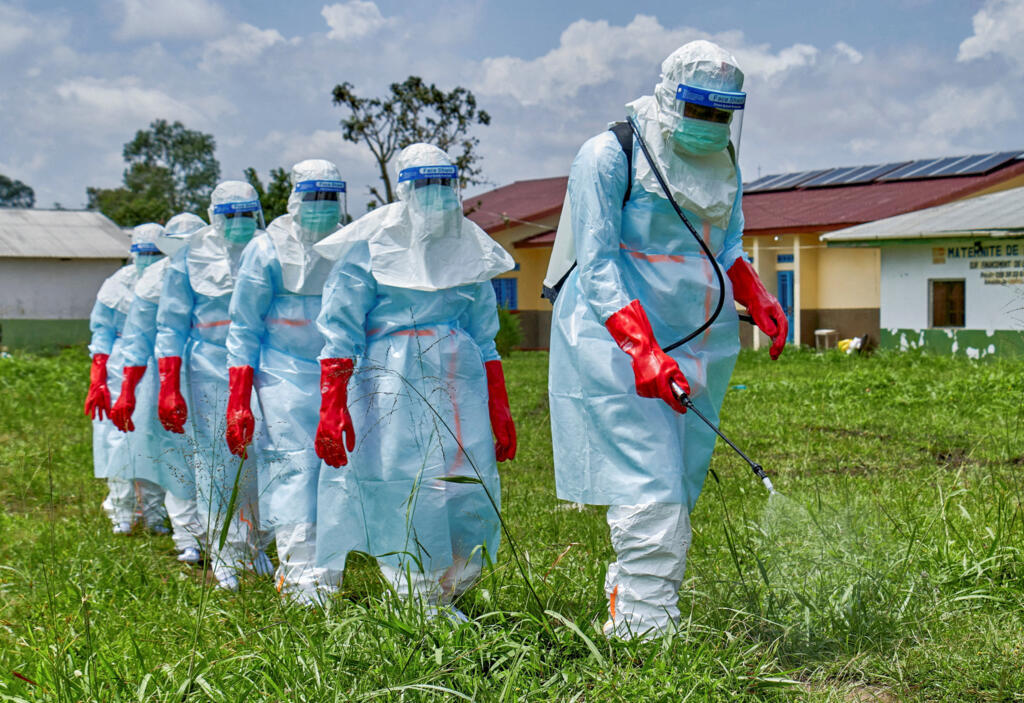
The Federal Government has stepped up health surveillance measures at airports, seaports, and land borders across the country as part of efforts to prevent the importation of Ebola Virus Disease (EVD) and other viral haemorrhagic fevers. The move follows concerns over the ongoing outbreak of the Bundibugyo strain of Ebola in parts of East and Central Africa and forms part of Nigeria’s broader disease preparedness and response strategy.
In a statement issued on Tuesday by the Assistant Director of Press and Public Relations at the Federal Ministry of Health and Social Welfare, Ado Bako, the government assured citizens that no Ebola case has been recorded in Nigeria.
“The ministry wishes to reassure Nigerians that there is presently no confirmed case of Ebola Virus Disease in Nigeria.
“However, in line with the Federal Government’s commitment to strengthening national health security and preventing cross-border disease transmission, heightened preparedness measures have been activated nationwide,” the ministry stated.
According to the ministry, health authorities have intensified surveillance at designated points of entry through mandatory temperature checks using infrared thermal scanners and handheld thermometers, travel history assessments, health declaration forms, and enhanced risk profiling for incoming travellers.
The government said it had activated “enhanced traveller risk assessment and screening procedures at designated points of entry” and established “secondary screening, isolation, and referral mechanisms for travellers presenting symptoms consistent with viral haemorrhagic fevers".
The measures mirror public health interventions deployed during previous disease outbreaks, including the 2014 Ebola crisis and the COVID-19 pandemic.
Beyond border controls, the ministry disclosed that disease surveillance systems have been strengthened nationwide to facilitate the early detection of suspected cases. These include enhanced Integrated Disease Surveillance and Response activities, as well as expanded community-based and event-based surveillance mechanisms.
According to the statement, “Enhanced Integrated Disease Surveillance and Response activities nationwide” and “strengthened event-based and community-based surveillance systems” are currently ongoing to ensure early detection of any suspected case.
The ministry also revealed that Public Health Emergency Operations Centres have been activated, while Rapid Response Teams at both national and sub-national levels have been placed on standby to respond swiftly to any potential outbreak.
Healthcare facilities across the country have also been directed to strengthen infection prevention and control measures, improve triage procedures, and ensure prompt reporting of suspected cases.
“Healthcare facilities nationwide have also been advised to maintain a high index of suspicion for viral haemorrhagic fevers, strengthen triage systems, promptly isolate suspected cases, and adhere strictly to established reporting protocols,” the ministry said.
While urging citizens to remain calm, the government emphasised that the measures are precautionary and aimed at safeguarding public health.
The ministry further advised Nigerians to practise regular hand hygiene, avoid direct contact with bodily fluids of individuals showing symptoms of illness, refrain from handling dead animals or bushmeat from unknown sources, and promptly report any unusual illness or unexplained deaths to health authorities.
NCDC In Funding Crisis
The House of Representatives on Tuesday raised alarm over what it described as a severe funding crisis at the Nigeria Centre for Disease Control (NCDC), warning that the agency’s capacity to respond effectively to a potential Ebola outbreak and other public health emergencies has been significantly weakened.
The concern followed the consideration of a motion of urgent national importance sponsored by Amobi Ogah, who represents Isuikwuato/Umunneochi Federal Constituency of Abia State.
Moving the motion, Ogah said recent developments in Central Africa have underscored the need for Nigeria to strengthen its disease surveillance and emergency response mechanisms. He noted that the Africa Centres for Disease Control and Prevention reported an outbreak of the Bundibugyo strain of Ebola virus disease in the Ituri Province of the Democratic Republic of Congo on May 15, 2026.
According to the lawmaker, the outbreak presents a potential threat to countries across the continent, including Nigeria.
He recalled that the NCDC had placed the country on high alert on May 25, 2026, over the risk of Ebola importation and announced measures aimed at improving national preparedness. However, he questioned the agency’s ability to implement those measures amid persistent financial challenges.
“It is known that the NCDC received no operational funding in 2025, with no capital releases made to date against the approved 2026 allocation.
“Furthermore, the overhead releases are highly epileptic and grossly inadequate, which is in direct violation of basic international standards and constitutes an abuse of the Appropriations Acts.
“How then can the preparedness of the centre for emergencies be guaranteed?” he asked.
Ogah warned that dwindling government releases, coupled with declining donor support, have weakened Nigeria’s public health security framework.
He said the agency is struggling to sustain critical operations, including disease surveillance, laboratory services, outbreak preparedness and emergency response activities.
“It is extremely disturbing to note that, at present, this prolonged funding gap has critically constrained core national functions, including outbreak response operations, laboratory services, surveillance systems, logistics coordination, and frontline emergency preparedness activities in Nigeria,” he said.
The lawmaker further highlighted several challenges facing the NCDC, including unpaid contractors, stalled laboratory and treatment centre projects, shortages of essential diagnostic supplies, weak biosafety infrastructure and limited emergency response capacity.
According to him, “Laboratory reagents, consumables, and other materials critical for outbreak screening and diagnosis are almost completely out of stock.”
Nigeria earned global recognition for successfully containing the Ebola outbreak that entered the country in 2014 through an infected traveller from Liberia. Public health experts have consistently maintained that sustaining such response capabilities requires continuous investment in surveillance systems, laboratory infrastructure and emergency preparedness.
Following the adoption of the motion, the House called on the executive arm of government to immediately release adequate funds already appropriated for the NCDC to enable the agency to clear outstanding obligations and maintain uninterrupted operations.
The lawmakers also urged port health authorities to strengthen cross-border surveillance and screening measures to prevent the importation of infectious diseases into the country.
In addition, the House directed its Committee on Infectious Diseases to monitor the utilisation of any released funds and report back for further legislative action. The Committee on Legislative Compliance was also mandated to ensure the full implementation of the resolutions.