

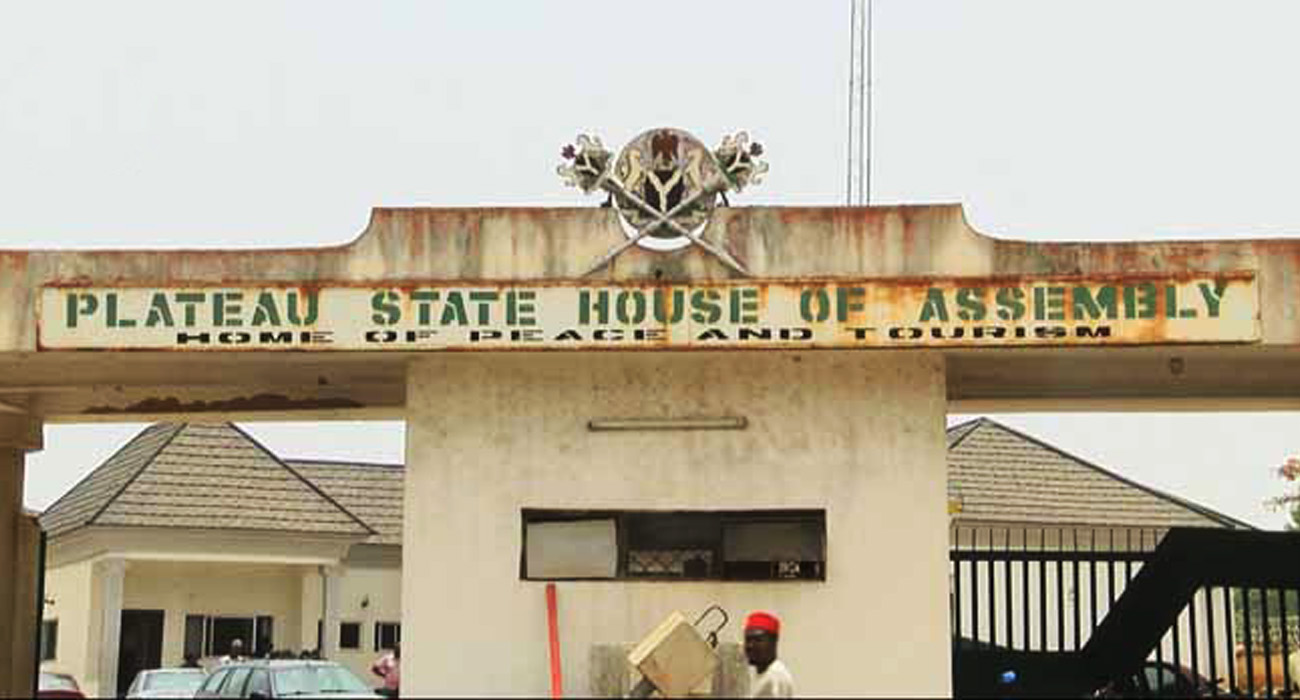
The Plateau State House of Assembly has advanced a bill seeking to introduce pension and retirement benefits for former speakers, deputy speakers, principal officers, and members of the legislature after it scaled second reading during Tuesday’s plenary. The bill, sponsored by Eli Ankala, representing Rukuba-Irigwe Constituency under the All Progressives Congress (APC), was debated on the floor of the House in a session presided over by Speaker Daniel Nanlong.
Presenting the lead debate, Ankala explained that the proposed legislation would establish the Plateau State House of Assembly Pension Board, which would be responsible for managing pension matters and maintaining accurate records of eligible beneficiaries.
He argued that the creation of the board would improve pension administration by eliminating cases of ghost beneficiaries, strengthening accountability, and ensuring proper management of funds meant for retired lawmakers.
According to the lawmaker, the bill was designed to create a sustainable and organised pension structure for former members of the state legislature. He added that the framework would ensure proper documentation, effective data management, and regular verification of beneficiaries.
“The board will strengthen pension administration through proper documentation, effective data management and regular verification of beneficiaries. It will also provide a legal framework for transparent and accountable payment of retirement benefits,” he said.
However, the proposed legislation has drawn criticism from the opposition Peoples Democratic Party (PDP) in the state, which described the move as inappropriate and insensitive given the current challenges facing Plateau.
In a statement, PDP spokesperson Choji Felix Dalyop criticised the timing of the bill, arguing that the state was dealing with pressing issues, including insecurity and economic difficulties.
Dalyop alleged that the proposed pension scheme could be exploited as a means of channelling public resources toward a select group of individuals. He cautioned that approving the bill could encourage a culture where political office is viewed as a pathway to personal benefits rather than public service.
He warned that if enacted, the legislation could create a troubling precedent by transforming public positions into “an avenue for lifetime private enrichment rather than selfless public service".