


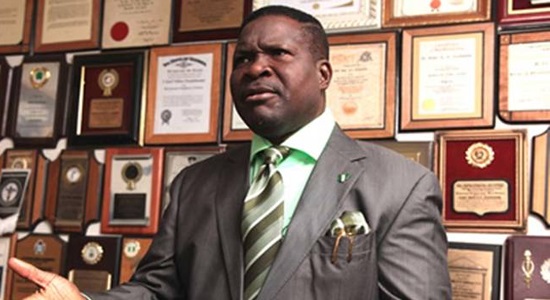
Operatives of Nigeria’s anti-graft agency, the Economic and Financial Crimes Commission (EFCC), have arrested the Director-General of the Energy Commission of Nigeria, Dr. Mustapha Abdullahi, over alleged money laundering involving more than N500 billion. The arrest reportedly took place in Abuja on Wednesday, intensifying scrutiny of the federal energy agency’s financial activities. According to sources familiar with the investigation, EFCC operatives detained Abdullahi for questioning at the commission’s headquarters in Abuja. Investigators are said to be examining a series of financial transactions linked to the alleged fraud.
A source quoted in the report said: “He was arrested in Abuja on Wednesday and is in the custody of the EFCC.” The source added that investigators were “grilling him over alleged money laundering involving more than N500 billion,” and that he was expected to remain in EFCC custody overnight.
The development comes shortly after the conviction of former Power Minister Saleh Mamman in connection with a N33.8 billion fraud case, further placing Nigeria’s power and energy sector under public scrutiny.
Officials of the EFCC had yet to issue an official statement as of the time the reports were filed. EFCC spokesperson Dele Oyewale was reportedly unavailable for comment when contacted by journalists.
Abdullahi, who was appointed Director-General and Chief Executive Officer of the Energy Commission in October 2023, had previously faced allegations raised by the civil society group Network Against Corruption and Drug Trafficking (NACAT).
In a petition reportedly sent to President Bola Ahmed Tinubu in December, NACAT accused the commission’s leadership of operating what it described as a “well-coordinated and brazen scheme” tied to the award of solar streetlight contracts worth hundreds of millions of naira.
Copies of the petition were also forwarded to the EFCC and the Independent Corrupt Practices and Other Related Offences Commission (ICPC), urging authorities to investigate the contracts and procurement process.
The group alleged that five companies linked to the contracts were registered within a single week in 2023, shared similar addresses in Abuja, and allegedly had the same directors. NACAT claimed the arrangement violated Nigeria’s procurement regulations governing public contracts.
Neither Abdullahi nor the Energy Commission had publicly responded to the allegations at the time of reporting, while investigations by the EFCC were said to be ongoing.