


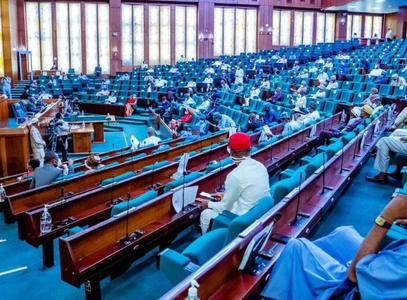
The House of Representatives on Thursday scaled a second reading bill seeking to establish a specialized medical college solely for the Nigerian Armed Forces. The bill, which is sponsored by Hon. Babajimi Benson (APC, Lagos), the Chairman of the House Committee on Defence, calls for the establishment of a military-run tertiary medical facility that will train physicians, specialists, and allied health professionals specifically for the Armed Forces and other uniformed services.
The proposed institution is intended to fill long-standing deficiencies in Nigeria's health workforce and is based on international best practices. It is based on current national statistics, international standards, and the medical needs of a contemporary active-duty military. The initiative's justifications include the large-scale exodus of Nigerian physicians, frequent strikes in civilian higher education institutions, the necessity of military-specific medical knowledge in areas like trauma care, tropical medicine, and CBRN response, and the tactical benefit of keeping a stable, strike-proof medical corps. Benson: Health capacity is national security
Benson, who led the bill's debate, said that a country's defence readiness is closely related to its medical capabilities. He stated that consistent and efficient medical support is essential for the Armed Forces' overall force protection, casualty evacuation, personnel welfare, and preventive health.
Although the Nigerian Army Medical Corps (NAMC) has made significant strides, he voiced worry that the country's overall health system still faces a serious physician shortage, unequal specialty distribution, and ongoing brain drain.
He claims that the planned military medical college would produce a long-term, disciplined pipeline of medical professionals who have received specialized training for the particular requirements of military service.
Over the past ten years, Nigeria has seen an unparalleled exodus of medical experts, according to Benson. He remembered that over 9,000 Nigerian doctors left the nation between 2016 and 2018 alone, citing a 2022 report. Since then, thousands more people have migrated, according to additional national data and official filings. Approximately 16,000 doctors left the country over a five-year period, leaving nearly 55,000 behind, according to a widely cited analysis. According to other research, about half of all Nigerian-trained doctors have left the country at some point.
The situation is far worse among the Armed Forces. Only 21 doctors were commissioned by the Army between 2019 and 2025—the same number that left the army during that time. There are currently just 189 doctors in the Army, and 71 of them are receiving specialized training in civilian facilities.
“The Army needs at least 15 times its current number of doctors,” Benson said, adding that the Navy and Air Force face similar manpower deficits. He warned that retention rates are far below recruitment levels, creating an ongoing loss of skilled professionals with serious operational consequences.
He underlined how personnel shortages impede the Armed Forces' ability to deliver normal healthcare, perform surgeries, and adequately staff military hospitals. Civilian academic strikes exacerbate the problem.

