

A wave of political realignments intensified on Thursday as key opposition figures, including former Vice President Atiku Abubakar, former Rivers State governor Rotimi Amaechi, Oyo State Governor Seyi Makinde, former Anambra State governor Peter Obi and businessman Mohammed Hayatu-Deen, moved to challenge President Bola Tinubu ahead of the 2027 presidential election. The opposition leaders took major steps to formalise their ambitions, with Atiku and Amaechi submitting presidential nomination forms under the African Democratic Congress, while Makinde unveiled a new political alliance involving the Peoples Democratic Party and the Allied Peoples’ Movement. Obi, now aligned with the Nigeria Democratic Congress, also declared his readiness to seek the presidency.
Atiku, speaking after submitting his ADC nomination form in Abuja, described his ambition as part of a broader national rescue mission. “This is more than a political journey; it is a national movement rooted in hope, renewal, and the collective resolve to save Nigeria from despair,” he said. He urged Nigerians across ethnic and religious lines to unite behind what he called a movement to “restore prosperity and better days” to the country.
Amaechi, meanwhile, launched a direct attack on the ruling All Progressives Congress, blaming the party’s “Emilokan” philosophy for the country’s economic hardship. “It is Emilokan that brought us here. It is ‘our turn’ that brought us here. Now Nigerians are suffering,” he declared shortly after submitting his form at the ADC secretariat.
The former transportation minister argued that the 2027 election should be decided on competence rather than ethnic or regional sentiments. “Nigerians should vote for merit, not those who say ‘I’m from this place’ or ‘it’s our turn’,” he said, insisting that his experience as Rivers governor and transportation minister positioned him as the most qualified contender. “Go back to Rivers State and see what I have done… and I will, in four years, turn the country around.”
Obi, in a televised interview, pledged to serve only one term if elected president. “I want to be a one-term president because of stability. I will not stay a day longer than four years, even with a gun to my head,” he said. The former Labour Party presidential candidate also criticised the Tinubu administration’s economic policies, warning that Nigeria was facing one of its most difficult periods.
Drawing comparisons with global leaders, Obi cited former South African president Nelson Mandela and former US presidents Abraham Lincoln and John F. Kennedy as examples of leaders whose legacies endured despite limited time in office. “History shows that the longer many African leaders remain in power, the more likely they are to be corrupted by it,” he stated.
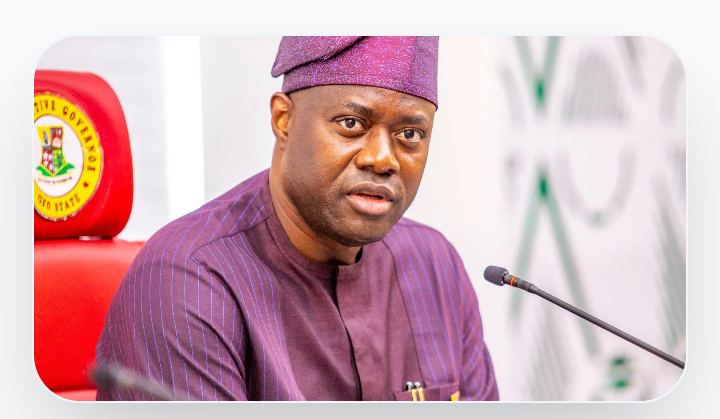
In Ibadan, Makinde formally declared his presidential ambition during a mega rally organised to unveil the PDP-APM alliance. The Oyo governor warned that Nigeria’s democracy was under threat from attempts to impose a one-party state, saying opposition parties must unite to preserve democratic values.
“We have found ourselves at a point in our nation’s political history where the very foundations of democracy are being shaken,” Makinde said. He lamented worsening economic and security conditions, adding that many Nigerians had been pushed into “survival mode.” According to him, the alliance marked “the birth of the Reset Nigeria Movement” aimed at offering Nigerians a credible alternative ahead of 2027.
Former Osun State governor Olagunsoye Oyinlola said the growing opposition coalition was driven by public dissatisfaction with the Tinubu administration. He argued that many promises made during the 2023 election campaign had not materialised, particularly in the areas of power supply, economic stability and national development.
Political observers say the latest declarations signal the beginning of an intense battle for Nigeria’s presidency, with opposition parties seeking to build a united front against Tinubu and the APC. The emergence of new alliances and the migration of prominent politicians into alternative platforms are expected to reshape the country’s political landscape as preparations for the 2027 election gather momentum.