

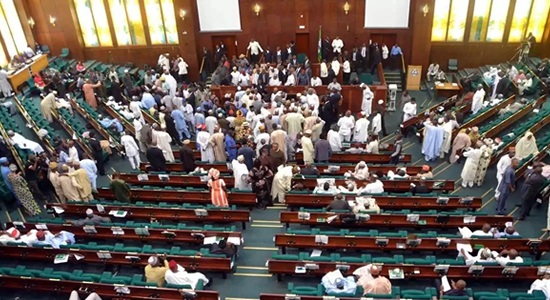
The much-anticipated harmonisation meeting of the Conference Committee on the Electoral Act (Repeal and Re-enactment) Bill, 2026, failed to hold on Monday, casting fresh uncertainty over key electoral reforms and raising the prospect of a review of the 2027 general elections timetable. The deadlock occurred as senators and members of the House of Representatives were unable to formally sit or reach consensus ahead of Tuesday's plenary, where "very critical decisions" are expected to be taken.
Multiple sources confirmed that the meeting, scheduled for 11:00 a.m. at the Senate President Conference Room 3.01, did not hold due to the absence of several House members. A senior member of the committee, contacted after the aborted session, said no agreement was reached because the meeting never commenced.
Some senators reportedly arrived at the venue at the appointed time and waited, while both chairmen of the electoral committees, Senator Simon Bako Lalong and Hon. Adebayo Balogun, joined late.
After several minutes of waiting, the senators relocated to Lalong’s office. They later reconvened and agreed to reschedule the meeting to 3:00 p.m.
By 3:30 p.m., some senators, including Jibrin Isah, Abba Moro and Tahir Monguno, were present. However, no House members turned up. At about 4:00 p.m., Lalong arrived and was later joined by Balogun, still without other House committee members.
The two leaders held a brief closed-door meeting lasting about 10 minutes before dispersing, effectively ending the day without a harmonised position. Sources hinted at a possible late-night meeting outside the National Assembly complex in a last-minute effort to align positions before Tuesday’s plenary.
The conference committee is mandated to reconcile differences in key clauses of the bill, including its explanatory memorandum and long title. The most contentious issue remains Clause 60(3), which addresses the electronic transmission of election results.
The House version of the bill mandates real-time electronic transmission of results directly from polling units to the Independent National Electoral Commission’s IReV portal. However, on February 4, 2026, the Senate amended the clause by deleting the words “real-time,” opting for a more flexible framework that allows electronic transmission at the commission’s discretion.
Both chambers had earlier constituted 12-member conference committees ahead of final passage and transmission for Presidential assent. The Senate delegation, appointed by Senate President Godswill Akpabio, is chaired by Lalong and includes several senior lawmakers.
Beyond the dispute over electronic transmission, lawmakers are also expected to deliberate on a proposed review of the 2027 elections timetable released by the Independent National Electoral Commission. The move follows criticism that one of the scheduled dates coincides with Eid festivities at the end of Ramadan.
The Muslim Rights Concern (MURIC) faulted the timetable, warning that holding elections during a major religious celebration could suppress voter turnout and heighten tensions. A senator, speaking anonymously, said, “Shifting the date of the election from February 2027 to January of the same year, is necessary to avoid rancour and that is what we are going to do at plenary tomorrow (Tuesday) among other issues.”
Clerk to the National Assembly, Kamoru Ogunlana, announced that plenary would address “very crucial decisions on national issues,” intensifying speculation that both the harmonisation report and the election calendar may be revisited. With the committee yet to conclude its work and public pressure mounting ahead of 2027, lawmakers now face a pivotal choice over mandatory real-time electronic transmission and possible adjustments to the election timetable, as suspense deepens over one of the most politically charged legislative contests before the next general elections.