
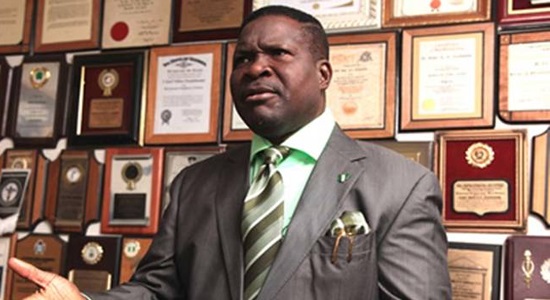
Nigeria has stepped up diplomatic efforts to secure justice and compensation for its citizens affected by recurring attacks in South Africa, saying at least 98 Nigerians have been killed since 2022 while many others lost businesses and property in violence the government describes as Afrophobic.
Minister of State for Foreign Affairs Sola Enikanolaiye said the government was compiling verified records of deaths, damaged businesses and other losses suffered by Nigerians before formally presenting compensation claims to the South African government. He added that diplomacy remained Nigeria's preferred approach, although "all options are still on the table".
The minister spoke after meeting South Africa's Minister of International Relations and Cooperation, Ronald Lamola, who visited Abuja as a special envoy of President Cyril Ramaphosa. Enikanolaiye later briefed President Bola Tinubu on the outcome of the discussions.
"We have seen a pattern that has become a concern to the Nigerian government," Enikanolaiye said, adding that official records showed 98 Nigerians had been killed in mob and hate-related attacks since 2022. "We made it very clear. And he (the special envoy) agreed with us."
He said Nigeria had distributed claims forms to affected citizens to document their losses before seeking compensation. "You can't even make a claim unless you know exactly the volume and distribution of those who are making those claims," he said.
Recalling previous negotiations with South Africa, Enikanolaiye said compensation had long been a contentious issue. "South Africans are a little bit edgy about compensation, and I remember it was a major contentious issue when we were negotiating the Early Warning Mechanism," he said, noting that South African officials had instead pointed to insurance and legal channels for redress. "We regard this as a work in progress. Despite the ongoing discussions, we will submit our claims when we complete the verification process on our side."
The minister said Nigeria had submitted a list of citizens killed in the attacks and demanded accountability. "As regards the number of Nigerians who have died, we gave them that list from 2022 to date. They promised to fast-track investigations into those deaths. We also insisted on accountability... We insisted on convictions," he said.
Enikanolaiye said the welfare and protection of Nigerians remained central to President Tinubu's foreign policy, describing the government's diplomatic engagements as part of a broader effort to strengthen national security, economic stability and citizens' welfare at home and abroad.
He also stressed that every Nigerian deserved protection regardless of immigration status, saying, "Whether they are regular or irregular, they are human beings... Criminals also have a right to life. You cannot say that because they are criminals and begin to hound and kill them." He disclosed that about 1,490 Nigerians had already been evacuated from South Africa, with more seeking assistance to return home.
Enikanolaiye said both countries had agreed to reactivate the Nigeria-South Africa Early Warning Mechanism and the Bi-National Commission to help prevent future violence. He added that President Tinubu believed the attacks were more accurately described as Afrophobic than xenophobic and would continue engaging President Ramaphosa in pursuit of a lasting solution.