
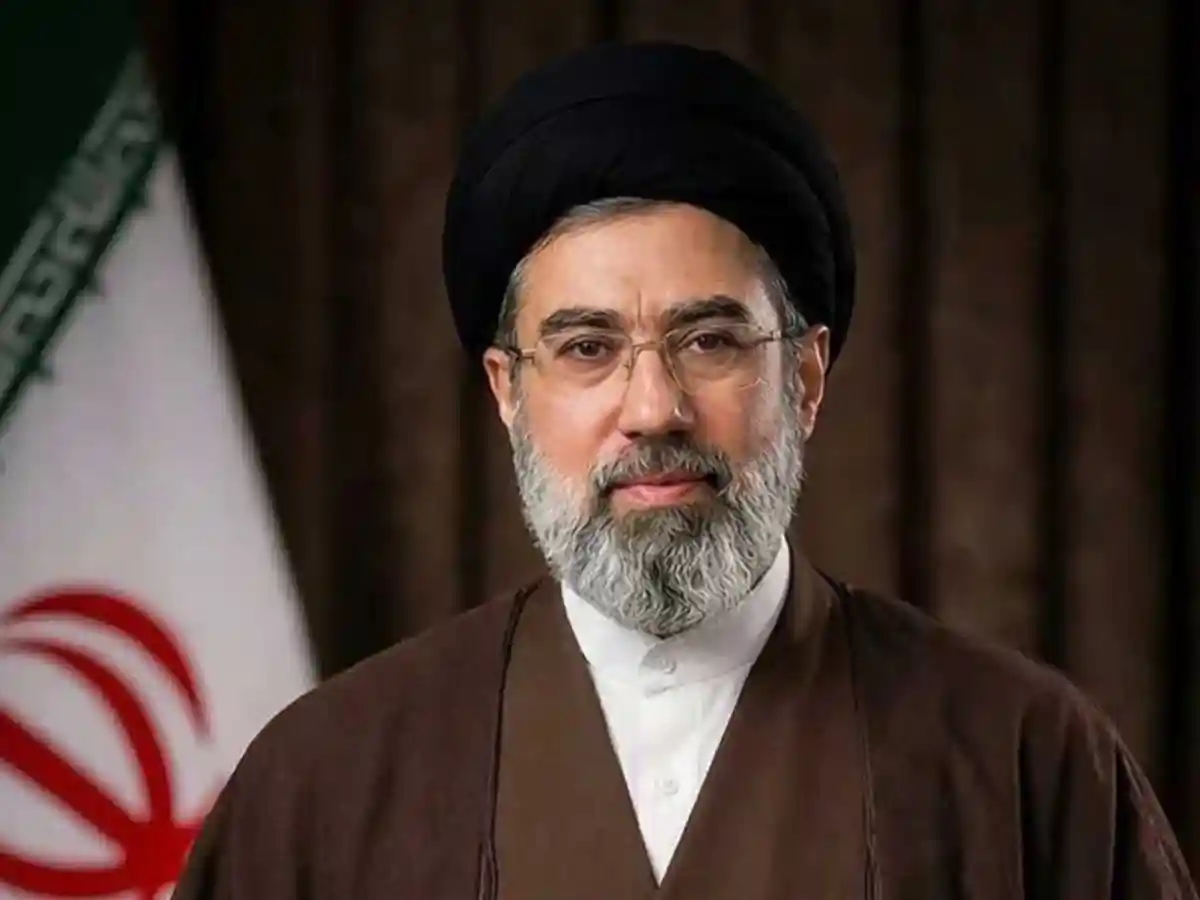
Iran's new and secretive supreme leader, Mojtaba Khamenei, issued his first public statement Thursday, vowing to continue the war against Israel and the United States while threatening to expand the conflict to additional fronts. The remarks came as fighting intensified across the Middle East, disrupting global energy supplies, shaking financial markets and raising fears of a wider regional war.
In a sharply worded message delivered through Iranian state television, Khamenei promised continued retaliation against Iran's enemies and warned Gulf Arab states that they would face "more pain" if they continued to support U.S. and Israeli operations. He also hinted that Iran could broaden the conflict into new arenas where its adversaries would be vulnerable.
Early Friday, U.S. President Donald Trump escalated tensions further with a post on social media threatening Iran's leadership. "Watch what happens to these deranged scumbags today," Trump wrote, adding that the damage inflicted on Iran and its leaders was a "great honor."
Meanwhile, Israeli Prime Minister Benjamin Netanyahu said Israeli military strikes were designed not only to weaken Iran militarily but also to create conditions for political upheaval inside the country. Addressing Iranians directly at a news conference, Netanyahu declared: “It is in your hands… We are creating the optimal conditions for the fall of the regime.”
Since the conflict began, U.S. and Israeli forces have targeted security checkpoints across Iran in an effort to weaken the government’s ability to suppress internal dissent, according to the U.S.-based monitoring group Armed Conflict Location and Event Data Project (ACLED).
Heavy airstrikes were reported early Friday around the capital, Tehran, as well as in surrounding areas. The specific targets were not immediately confirmed, but explosions were heard across several districts as the war entered its 13th day.
Global economic anxiety deepened as oil prices surged to about $100 per barrel while stock markets around the world declined. The disruption stems largely from the effective closure of the Strait of Hormuz, a critical maritime chokepoint through which roughly one-fifth of the world’s traded oil normally passes.
In response to rising prices, the United States Department of the Treasury announced it would ease sanctions on some Russian crude shipments for one month to stabilize energy markets. The temporary license allows oil already at sea to be delivered and sold, a move intended to offset supply disruptions caused by the conflict.
Iran has signaled it will continue targeting energy infrastructure across the region and maintain pressure on global oil flows. Officials view the strait’s closure as a key bargaining tool against Washington and its allies.
Iran’s ambassador to Tunisia, Mir Masoud Hosseinian, told reporters that Iranian naval forces had taken control of the waterway and carried out “precise strikes in response to attacks on our oil infrastructure.” He added that “global energy security is contingent on respect for Iran’s sovereignty.”
Khamenei, who has not appeared publicly since the war began, reportedly suffered minor injuries when his family residence was struck during the opening attacks that killed his father, former leader Ali Khamenei, and his wife. According to Iranian officials, the new leader is expected to appear at a major Eid prayer ceremony next week if his condition allows.
In his statement, Khamenei also called on Gulf Arab states to “shut down” U.S. military bases on their soil, arguing that Washington’s security guarantees were “nothing more than a lie.” He warned that Iran had studied options for “opening other fronts in which the enemy has little experience and would be highly vulnerable.”
Regional attacks continued Friday as Saudi Arabia’s defense ministry reported intercepting more than three dozen drones headed toward the kingdom’s Eastern Province. The barrage marked one of the largest drone assaults launched toward the country since the conflict began.
The war has also intensified military action elsewhere in the region. Israeli forces renewed heavy strikes in Lebanon, targeting positions linked to the Iran-backed militant group Hezbollah. One strike hit a neighborhood near Lebanon’s parliament and several international embassies in Beirut.
The fighting has taken an increasing human toll across multiple countries. France confirmed that a soldier was killed in an attack near Irbil in northern Iraq, while several U.S. personnel were reported injured in drone strikes on a base shared by American and British troops. In Lebanon, Israeli strikes killed at least 16 people, including children, as rescue workers searched through rubble in devastated villages.