


The United States has placed Venezuela under temporary American control after U.S. forces captured President Nicolas Maduro and his wife, Cilia Flores, in a dramatic overnight operation, President Donald Trump announced on Saturday. Maduro was seized from a safe house during an operation that included strikes on military installations and power outages in parts of Caracas, before being flown to the United States to face drug-related charges.
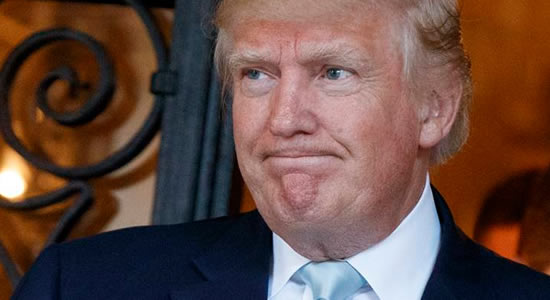
Speaking at a press conference in Florida, Trump said Washington would administer Venezuela during an interim period. “We will run the country until such time as we can do a safe, proper and judicious transition,” he said, adding, “We can’t take a chance that someone else takes over Venezuela who doesn’t have the interests of Venezuelans in mind.”
Trump said major U.S. oil companies would move into Venezuela to rehabilitate its oil sector, which holds the world’s largest proven reserves, though experts warned the effort could take years. Critics questioned the administration’s focus on oil, arguing it undermined claims that the operation was primarily a law enforcement effort aimed at disrupting drug trafficking.
Maduro and Flores were first taken to a U.S. Navy ship offshore before being flown to New York on Saturday evening. Video footage showed a plane landing near New York City, followed by a heavily guarded convoy arriving at the Metropolitan Detention Center in Brooklyn. U.S. officials said Maduro, who faces charges including narco-terrorism conspiracy, is expected to appear in federal court in Manhattan on Monday. His wife also faces charges, including cocaine importation conspiracy.
In Caracas, Vice President Delcy Rodríguez denounced the operation as a kidnapping and appeared on state television with senior officials. “We demand the immediate release of President Nicolas Maduro and his wife Cilia Flores,” she said, calling Maduro “the only president of Venezuela.” A Venezuelan court later ordered Rodríguez to assume the role of interim president.
While streets in much of Venezuela remained calm, with soldiers patrolling some areas and small pro-Maduro demonstrations reported, reactions were mixed. “I’m happy, I doubted for a moment that it was happening because it’s like a movie,” said Carolina Pimentel, a merchant in Maracay. Analysts warned the removal of Maduro could create a power vacuum in the strategically located country.
Trump declined to give details on how Washington would govern Venezuela while its institutions and military remain intact, saying officials “standing right behind me,” including Secretary of State Marco Rubio and Defense Secretary Pete Hegseth, would oversee the process. He also left open the possibility of deploying additional forces, saying, “We’re not afraid of boots on the ground.”
The intervention drew swift international reaction. Argentina’s President Javier Milei praised Venezuela’s new “freedom,” while Mexico condemned the move and Brazil’s President Luiz Inacio Lula da Silva said it crossed “an unacceptable line.” Russia and China criticized the operation, with Beijing saying it “seriously violates international law” and threatens regional stability.
At home, Trump’s decision carries political risks ahead of November’s midterm elections. He insisted a U.S. occupation “won’t cost us a penny” because it would be paid for by Venezuela’s oil, a claim that revived comparisons to the Iraq war. Some Republicans voiced unease, with Representative Marjorie Taylor Greene writing, “This is what many in MAGA thought they voted to end. Boy were we wrong.”


