


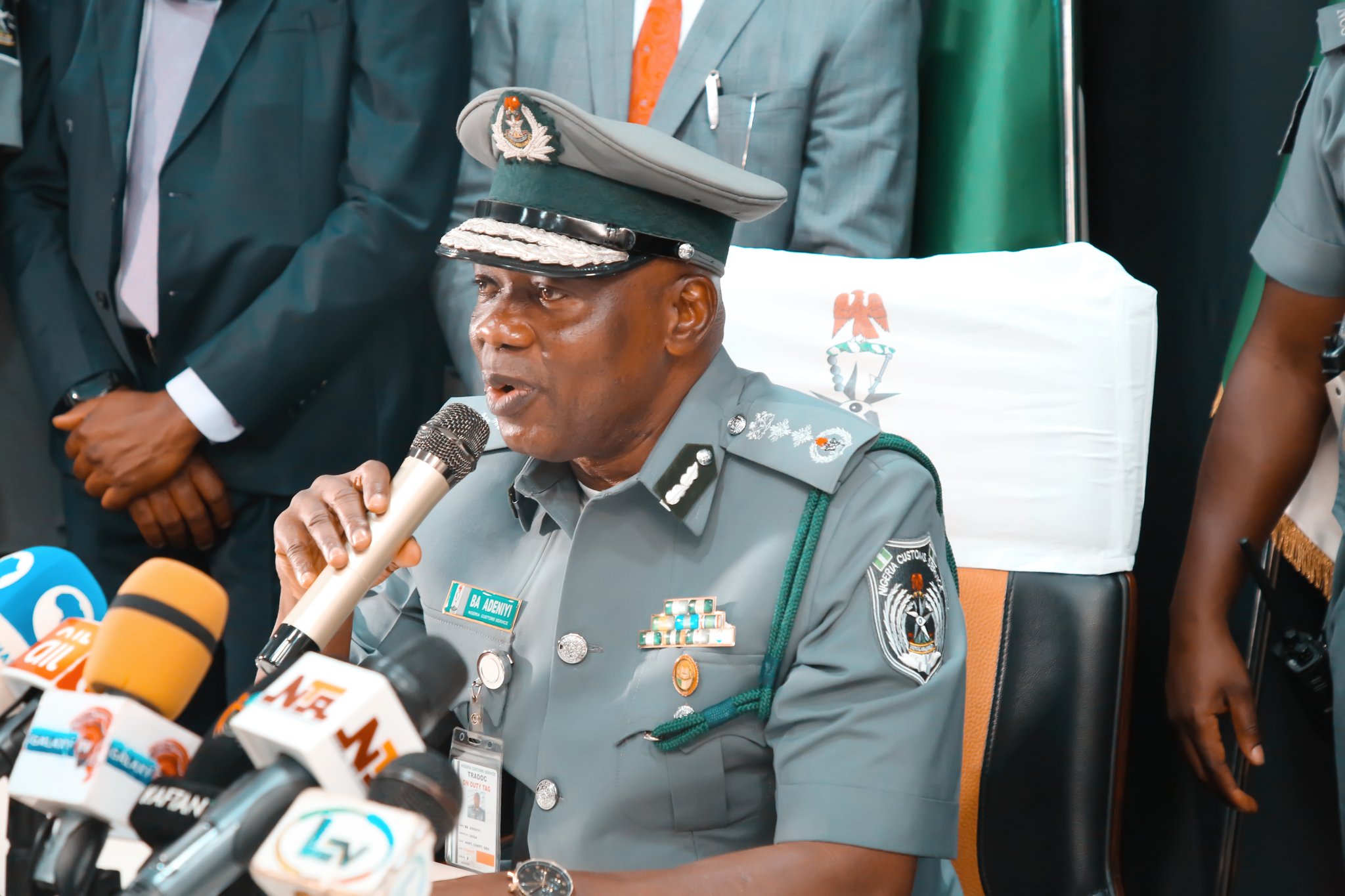
With a total revenue collection of ₦7.281 trillion in 2025, the Nigeria Customs Service (NCS) exceeded its yearly objective of ₦6.584 trillion by ₦697 billion, a rise of more than 10% above forecast. With a rise of almost ₦1.18 trillion, or 19%, from ₦6.1 trillion in 2024 to ₦7.28 trillion in 2025, the statistic also shows a significant year-over-year performance, highlighting what the Service refers to as the practical results of persistent reforms. Speaking on Monday at the 2026 International Customs Day celebration and the official launch of the Nigeria Time Release Study (TRS) at Ladi Kwali Hall, Abuja Continental Hotel, Comptroller-General of Customs Adewale Adeniyi stated that the accomplishment was evidence that reforms based on cooperation, technology, and compliance are working.
Customs Boss Adewale Adeniyi claims that improved data utilisation, digital tools, better compliance, and disciplined enforcement, all while fortifying partnerships with the private sector and upholding trade facilitation commitments, were the main drivers of the revenue gains rather than overzealous enforcement or pressure on lawful traders.
In order to maintain the service's dual purpose of safeguarding society and promoting economic success, particularly in the face of intricate global supply chains and technology-driven criminality, the head of Customs presented a three-pronged plan for the future.
Using technologies including risk management systems, non-intrusive inspections, post-clearance audits, and data analytics, the Service will first strengthen intelligence-led and technology-driven enforcement.
Second, Customs will formalise process changes that will shorten cargo clearance times, improve transparency, and remove unnecessary bottlenecks. Implementing the Time Release Study's recommendations, such as coordinated inspections, better gate coordination, and increased system interoperability across port stakeholders, is essential to this endeavour.
Third, emphasising that both protection and facilitation are shared responsibilities, the Service intends to fortify partnerships with other government agencies, the organised private sector, port and maritime operators, financial institutions, and international organisations like the World Customs Organization (WCO).
The Comptroller-General underlined that Customs' responsibility extends well beyond revenue collection and tariff enforcement as he anchored his remarks on the WCO's 2026 theme, "Customs Protecting Society Through Vigilance and Commitment".
He outlined significant enforcement achievements from the previous year, such as the seizure of more than 2,500 shipments worth more than ₦59 billion, which included drugs, pharmaceutical counterfeiters, weapons and ammunition, wildlife products, petroleum products, automobiles, and inferior consumer goods.
Among the noteworthy operations were the rescue of over 1,600 exotic birds at Nigerian airports, which disrupted a significant wildlife trafficking network, and the interception of 16 containers of prohibited goods worth over ₦10 billion at Apapa Port, which included drugs, expired medications, and concealed firearms.
Time Release Study: Reform Driven by Data. An important turning point in Nigeria's trade facilitation agenda was the start of the Time Release Study, which was carried out at Tincan Island Port. With over 600 statements, the study offers the most thorough, data-driven evaluation of cargo clearance procedures in recent memory.
The results demonstrate that physical examination durations are quite efficient, but they also show that clearance times are greatly extended by idle periods brought on by disjointed scheduling, manual recordkeeping, and inadequate coordination.
The Service claims that armed with empirical data, it will move from opinion-driven to evidence-based reforms, institutionalising the TRS as a routine diagnostic tool to track performance and promote ongoing improvement throughout the ports' ecosystem.
The Comptroller-General thanked President Bola Ahmed Tinubu, the Honourable Ministers, the World Customs Organisation, the Government of the United Kingdom, and Nigeria Customs Service officers working under difficult conditions across the country for their support of the TRS program.
Additionally, he praised international partners, private sector partners, and sister government agencies, pointing out that Nigeria gains the most when institutions collaborate.