


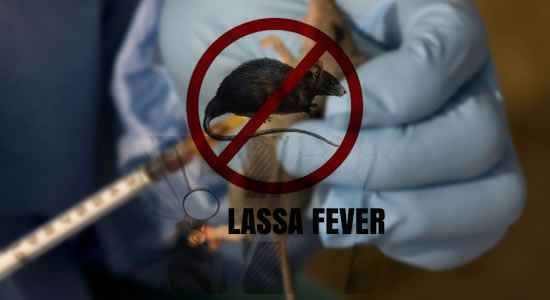
Nigeria is grappling with a worsening outbreak of Lassa fever, with fresh fatalities reported in Taraba, Benue, Plateau and Edo states, even as national surveillance data indicate a steady rise in confirmed infections. Health authorities say the impact on frontline workers is particularly troubling, with several doctors and nurses contracting the virus in the line of duty.
At the Federal Medical Centre, Jalingo in Taraba State, officials confirmed that 35 patients have died in what they described as one of the most severe outbreaks in recent years. The deaths followed a surge in suspected and confirmed cases managed at the facility .
The Head of Clinical Services, Dr. Suleiman Abubakar Kirim, told Daily Trust that 226 suspected cases were admitted, out of which 95 were laboratory-confirmed. Of the confirmed cases, 35 patients died, while 20 others have been treated and discharged.
Dr. Kirim disclosed that three hospital staff, a medical doctor, a nurse and a driver, contracted the virus. While the doctor and nurse recovered, the driver succumbed to the infection. He described the outbreak as the highest number of suspected cases and fatalities recorded by the centre in recent years, and commended both the Federal Government and Taraba State Government for supporting treatment efforts. Residents were urged to maintain clean environments and prevent rats from entering their homes.
In Benue State, the outbreak has taken a heavy toll on healthcare personnel. The State Government confirmed that 10 health workers have died after contracting infections linked to the outbreak, underscoring the vulnerability of frontline responders.
The State Epidemiologist, Dr. Msuega Asema, said 45 cases were confirmed out of 250 suspected infections recorded statewide. The fatalities include five doctors, four nurses, two community health extension workers and one hospital porter. Officials attributed the infections to human-to-human transmission and lapses in infection prevention protocols.
The Commissioner for Health and Human Services, Dr. Paul Ejeh-Ogwuche, said the state declared an outbreak on February 3 and activated containment measures, deploying surveillance officers across the 23 local government areas to strengthen monitoring and contact tracing. At the Benue State University Teaching Hospital, 28 admissions were recorded between January and February 2026, with 17 confirmed cases and three deaths. The Federal Medical Centre, Makurdi reported 10 patients currently on admission, including four infected health workers responding to treatment, but cited inadequate power supply and limited resources as operational challenges.
In Plateau State, authorities confirmed four deaths and 11 positive cases across seven local government areas, Quanpan, Shendam, Wase, Langtang South, Jos North, Jos South and Mangu. The outbreak, officials said, has spread across multiple communities since late 2025.
The Commissioner for Health, Dr. Nicholas Baamlong, said the index case was detected on December 20, 2025. “We were first alerted on the 20th of December 2025 following a case from Quanpan Local Government Area, and immediately we activated our Incident Management Team,” Baamlong said. “At that time, we traced about 69 contacts, from which we recorded 16 suspected cases, and five were confirmed positive. This means that from December till now, we have confirmed 11 positive cases in Plateau State.” He added that four deaths were recorded at the Jos University Teaching Hospital, Plateau Specialist Hospital and Bingham University Teaching Hospital, including one medical practitioner, while another doctor remains on admission.
In Edo State, the government formally declared an outbreak following a spike in confirmed cases. The Commissioner for Health, Dr. Cyril Oshiomhole, said 29 cases had been confirmed with six deaths, particularly in Etsako West and Esan West local government areas.
“Following a careful epidemiological review and risk assessment by the Edo State Ministry of Health, I hereby formally declare a Lassa Fever Outbreak in Edo State,” Oshiomhole said. “We have recorded 29 confirmed cases of Lassa fever, with six deaths, with a notable increase in Etsako West and Esan West Local Government Areas.” He said all pillars of the State Public Health Emergency Operations Centre had been activated and response packs donated to the Irrua Specialist Teaching Hospital. “Lassa fever is preventable, and early presentation saves lives,” he added.
Nationally, the Nigeria Centre for Disease Control and Prevention reported a rise in infections in its Epidemiological Week 7 Situation Report covering February 9–15, 2026. Confirmed cases increased from 74 in Week 6 to 82 in Week 7, spanning Bauchi, Ondo, Gombe, Nasarawa, Kogi, Edo, Kano, Ebonyi, Kaduna, Taraba, Plateau and Benue states.
According to the agency, Nigeria has recorded 82 confirmed cases and 75 deaths so far in 2026, with a Case Fatality Rate of 23 per cent, higher than the 19.7 per cent recorded during the same period in 2025. Sixteen states across 58 local government areas have reported confirmed cases, with Bauchi, Taraba, Ondo and Edo accounting for about 84 per cent of infections. Bauchi leads with 33 per cent, followed by Ondo with 22 per cent, Taraba with 19 per cent and Edo with 10 per cent. Young adults aged 21 to 30 years remain the most affected demographic, while five healthcare workers were newly infected during the reporting week.
Public health experts say prevention remains the most effective tool against Lassa fever, a viral haemorrhagic illness transmitted primarily through contact with food or household items contaminated by infected multimammate rats. Human-to-human transmission can also occur, especially in healthcare settings lacking adequate infection prevention and control measures. Early diagnosis and treatment with ribavirin significantly improve survival rates.