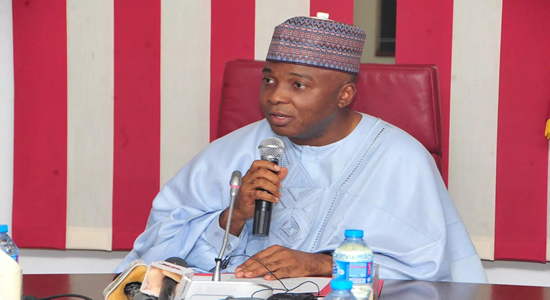



The Independent National Electoral Commission (INEC) has raised alarm over emerging threats to the 2027 general elections, warning that Foreign Information Manipulation (FIMI), social media volatility and artificial intelligence-driven disinformation could undermine the credibility of the polls. INEC Chairman, Joash Amupitan, sounded the warning in Abuja during the second yearly lecture of the Alumni Association of the National Institute for Security Studies, themed "Credible Elections and National Security in Nigeria," which convened security experts, policymakers and electoral stakeholders.
Amupitan described the risks as a "sophisticated triad" in which digital manipulation intersects with physical security challenges such as insurgency, communal clashes and electoral violence, warning that the convergence could deepen distrust in the electoral system.
“It is our collective responsibility to close this gap with surgical precision, hence the importance of this lecture. We must recognise that credible elections foster public trust in governance, and this trust is crucial for national security. When citizens believe in the electoral process, they are more likely to accept the outcomes, reducing the tensions that can lead to unrest.”
He stressed that credible elections remain central to national stability and urged collaboration among INEC, security agencies, civil society and voters to strengthen electoral integrity against evolving threats.
The INEC chairman also flagged declining voter turnout as a growing security concern, noting that participation fell from 53 per cent in 2011 to 26 per cent in 2023, creating vulnerabilities that could be exploited to question election legitimacy.
“Voter apathy is no longer just a civic concern but a growing security challenge. Apathy is a security threat. Despite the peaceful conduct of the FCT council polls, where turnout improved from 9.4 per cent to 15 per cent, voter apathy still remains a sobering challenge. Every vote cast is a brick in the wall of national security,” Amupitan said.
In response, INEC has introduced revised voter education materials, including a National Voter Education Manual and a youth-focused civic guide, developed with partners such as the Kimpact Development Initiative, to boost participation ahead of 2027.
Chairman of INEC’s Information and Voter Education Committee, Mohammed Haruna, said turnout has steadily declined since 1999 due to weak voter motivation and inadequate civic education, warning that legal reforms alone cannot reverse disengagement. “An indifferent electorate is a democracy in retreat,” he stated.
However, criticism of the electoral framework persists. Former Resident Electoral Commissioner, Mike Igini, described the Electoral Act 2026 as a “tragedy” and “regression,” arguing that it weakens earlier reforms and increases the influence of the judiciary in determining election outcomes. “The current amendment to the Electoral Act is a tragedy to our country, a big tragedy. It is a regression,” he said, adding that election winners “must be determined finally and conclusively at the polling unit and not in the court of law.”
Meanwhile, political advocacy groups have intensified calls for structural reforms. The Alliance for Yoruba Democratic Movement urged President Bola Tinubu and the National Assembly to restructure the country before the 2027 polls, warning that failure to do so could heighten tensions. The group also backed power rotation to the South and called for sweeping security reforms, including the establishment of state police, while cautioning against any threat to democratic governance.