


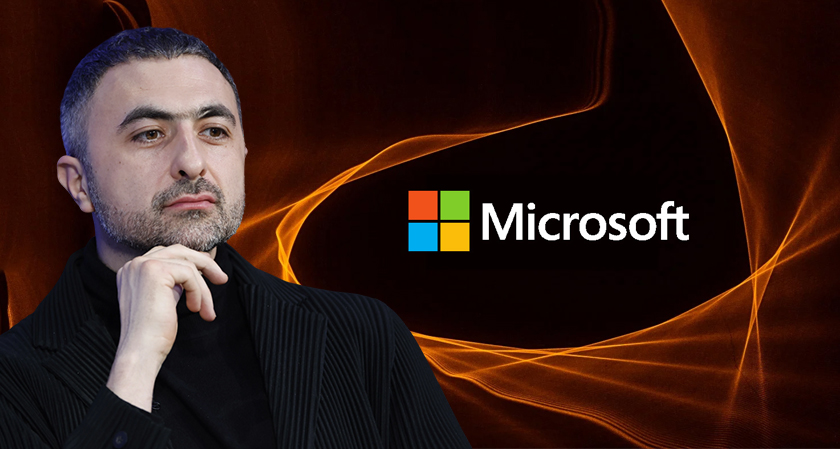
Artificial intelligence has steadily moved from research labs into everyday life, now underpinning search engines, smartphones, navigation tools and workplace software. According to Microsoft AI CEO Mustafa Suleyman, the next stage of this evolution will be far more personal, with AI systems becoming deeply embedded in how individuals live and make decisions. Suleyman has suggested that within the next five years, most people will have their own AI companion that understands them at an intimate level and supports them in daily tasks. Unlike current chatbots or digital assistants that largely respond to direct prompts, these future systems would continuously learn from users’ behaviour, locations, preferences and goals, adapting over time without needing constant instruction.
His remarks, widely circulated on social media, have reignited discussions in the tech community about the pace of AI development and the extent to which it may integrate into everyday human experience. The vision points to a shift away from purely functional tools toward long-term digital companions designed to operate alongside their users.
Suleyman has described a future in which AI is no longer confined to screens but functions in real time, seeing and hearing what users see and hear, and interpreting the world from their perspective. This level of contextual awareness, he argues, would allow AI to provide more meaningful and timely assistance beyond simple task automation.
A user on X, formerly Twitter, quoted Suleyman as saying, “In five years’ time, everybody will have their own AI companion who knows them so intimately and so personally that they will come to live life alongside you.” He further explained that such systems would be capable of understanding a user’s situation, preferences and motivations, not just their instructions.
According to Suleyman, the experience would be similar to having a trusted friend or helper who is always present, able to assist with everyday challenges and major life decisions alike. The goal, he said, is to create AI that feels supportive and intuitive rather than mechanical or transactional.
However, the prospect of such deeply personal AI has also raised concerns. Observers have pointed to potential risks around privacy, surveillance, user autonomy and long-term reliance on systems that constantly observe and learn from human behaviour.
Suleyman did not offer specific technical details or product timelines, but his comments reflect a broader industry push toward more adaptive and personalised AI systems than those currently available. Companies across the sector are increasingly focused on making AI more context-aware and responsive to individual needs.
Reactions on social media were mixed. While some users argued that the five-year timeframe might be too ambitious given current limitations in hardware, battery life and system maintenance, others felt it suggested that meaningful AI companionship is still some distance away.
As AI becomes more embedded in everyday life, the debate highlights growing tensions between innovation and concerns over cost, usability, control and ethics. Suleyman’s comments capture both the promise and the unease surrounding a future in which AI does not merely help people work, but accompanies them through life.
:max_bytes(150000):strip_icc():focal(781x205:783x207)/michael-b-jordon-vanity-fair-oscar-party-los-angeles-031626-b608023b9ed7466bb61ebeff58c60669.jpg?width=550&height=300 "Hollywood Celebrates Jordan’s Landmark Best Actor Victory")