

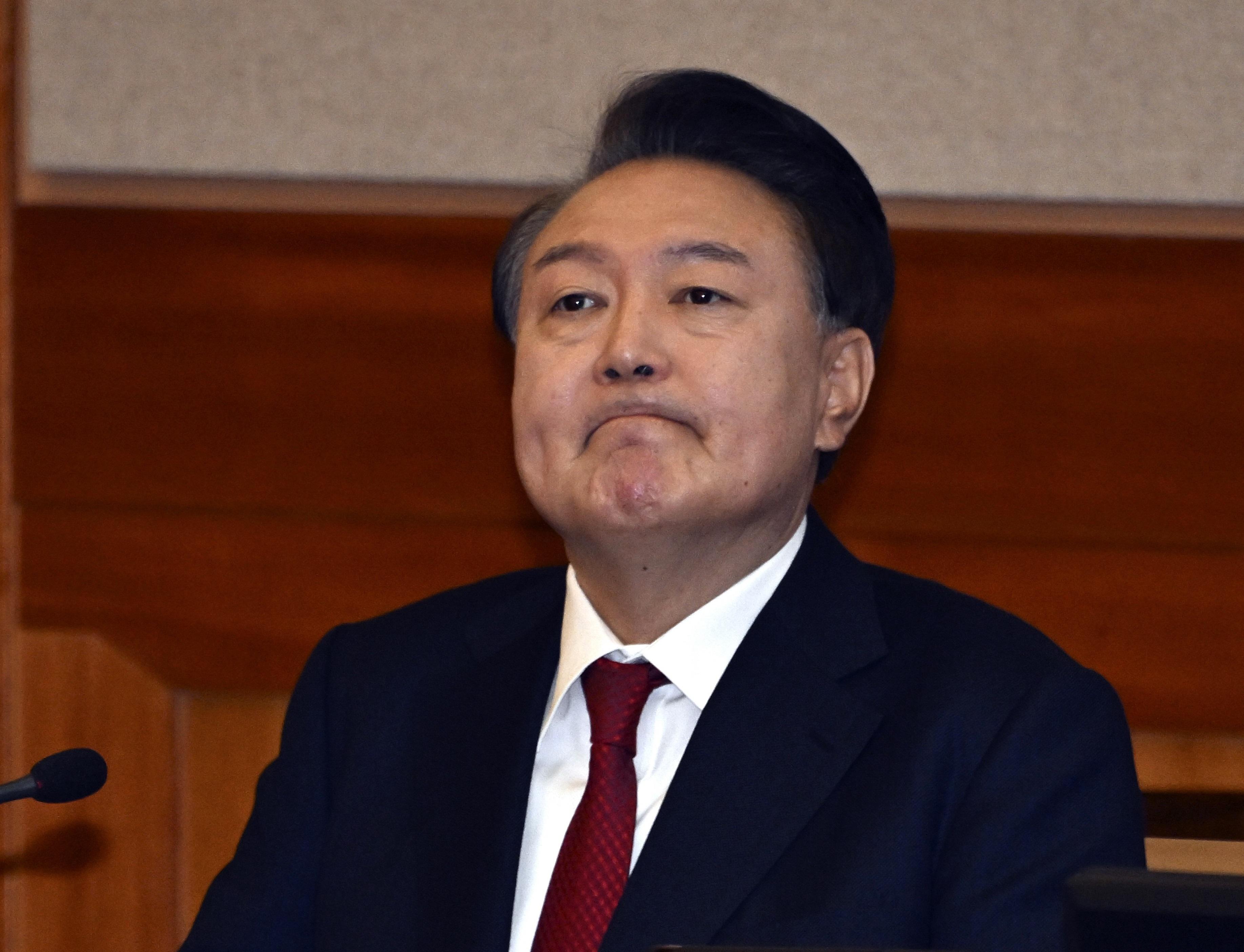
Former South Korean president Yoon Suk Yeol was sentenced to life imprisonment on Thursday for briefly imposing martial law in December 2024. Yoon was found guilty of rebellion by Judge Jee Kui-youn for organizing police and military troops in an unlawful attempt to take over the liberal-led National Assembly, detain legislators, and create unbridled authority for a "considerable" period of time. Yoon is probably going to appeal the decision.
Since there were no victims from the ill-thought-out power grab, most observers anticipate a life sentence for Yoon, despite a special prosecutor's appeal for the death penalty, arguing that his acts threatened the nation's democracy and warranted the worst punishment possible.
In response to calls for the abolition of the death penalty, South Korea has not executed a death row inmate since 1997, which is generally seen as a de facto moratorium on the practice.
Hundreds of police officers stood by as Yoon's supporters gathered outside a courthouse, their yells becoming louder as the jail bus carrying him passed. Yoon's detractors gathered close by, calling for his execution.
Several former military and police officials who were involved in implementing Yoon's martial law decree were also found guilty and sentenced by the court. One such official was former Defense Minister Kim Yong Hyun, who was given a 30-year prison sentence for his crucial role in organizing the military and executing the action.
A fervent conservative, Yoon has defended his martial law order as essential to prevent liberals, whom he referred to as "anti-state" forces, from using their legislative majority to thwart his plans. A quorum of MPs overcame a military roadblock and overwhelmingly voted to revoke the edict, which had been in effect for around six hours.
After being impeached by parliament, Yoon was suspended from office on December 14, 2024, and the Constitutional Court legally removed him from office in April 2025. He has been detained since July of last year and is being tried for several crimes, the most serious of which is the rebellion allegation.
Yoon was given a five-year prison sentence last month for evading arrest, making up the martial law declaration, and skipping a legally required full Cabinet meeting before making the announcement.
Two members of Yoon's cabinet have also been found guilty in separate cases by the Seoul Central Court. Among them is Prime Minister Han Duck-soo, who was sentenced to 23 years in prison for lying under oath, fabricating documents, and trying to legitimize the order by ramming it through a Cabinet Council meeting. Han has filed an appeal of the decision.